
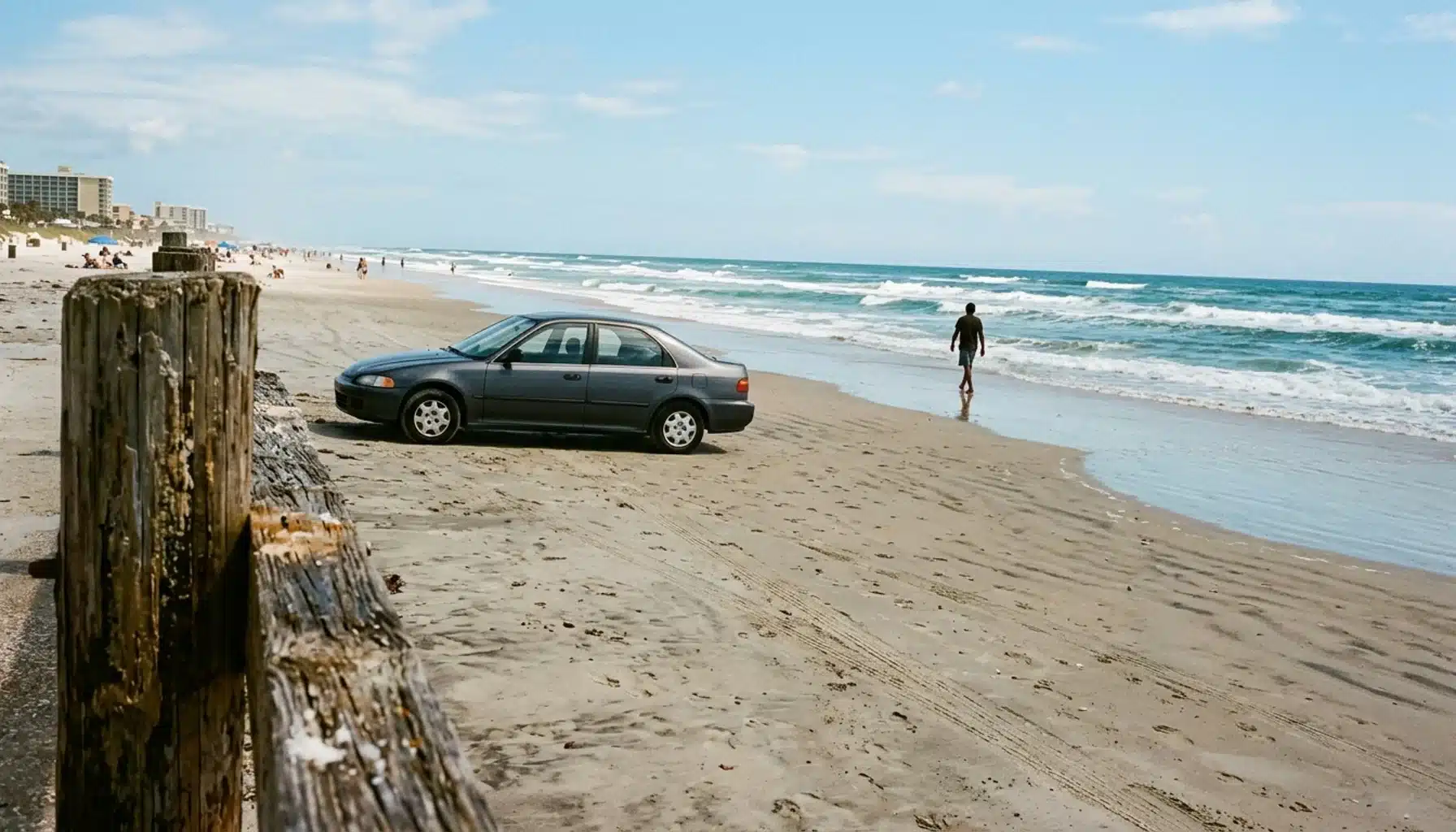
Yes, you can drive on Daytona Beach, but only on signed, designated stretches, at 10 mph, and only when the tide leaves room. As a local host at Sunny Florida Rentals, I’d add this: check the posted hours and fee before you roll onto the sand.
Key Takeaways
- Driving is allowed only in signed, designated sections of the beach, and parking is allowed seaward (east) of the wooden posts.
- The City of Daytona Beach lists driving hours of sunrise to sunset from November 1 to April 30, and 8 a.m. to 7 p.m. from May 1 to October 31, with tides and weather able to close access.
- The posted speed limit is 10 mph, headlights must be on, and at least one front window must be down.
- The county posts a nonresident on-beach driving fee of $30 per day (effective October 1, 2026); registered Volusia County residents can drive free.
- Violators of the speed limit may be fined $116 or more, so slow down and keep your eyes on pedestrians.
- If you’d rather skip the driving, stay on the sand and walk: the Boardwalk and Main Street Pier area is a short stroll from our oceanfront studios.
Daytona Beach built its name on cars. Racing started on this sand, and driving on the beach is still part of the local identity. But in 2026 it’s a regulated activity, not a free-for-all. The rules trip up first-timers more than you’d think.
The Halifax-area visitor report for calendar year 2026 counted 2,974,100 visitors, so the beach gets crowded. I’ve pulled the rules from the city and county pages so you don’t have to hunt for them. Rules and fees change, so I’ll point you to the official sites for the final word. Hours shift too.
Can You Drive on Daytona Beach in 2026?
Driving on Daytona Beach is permitted in designated, signed sections of the shoreline, and those sections are marked by signs and wooden posts. Outside those sections, the sand is pedestrian territory. Tides and weather can close or narrow the driving lane on any given day. Sea-turtle protections can do the same.
The City of Daytona Beach lists 26 beach access points for pedestrians and/or vehicles within five miles. Not every access point lets cars onto the sand. Some are walk-ons only, and that’s by design.
The debate over beach driving flares up every so often at the county level, and local news has covered leaders weighing whether to change how driving works. I won’t pin it to a date, because the details keep moving. Read the City of Daytona Beach beach information page the week you travel, because that’s where operating rules get posted.
My pick if you’re on the fence? Drive onto the beach once, for the experience, on a calm weekday morning at low tide. Then park and walk for the rest of the trip. You get the novelty without paying for repeat days or fighting soft sand.
What Are the Hours for Driving on Daytona Beach?
Daytona Beach driving hours vary by season. The City of Daytona Beach lists sunrise to sunset from November 1 to April 30, and 8 a.m. to 7 p.m. from May 1 to October 31. Tides and weather can shorten those windows.
Here’s the practical part. The summer cutoff is easy to misjudge, so treat 7 p.m. as the latest possible time and plan to be off the sand earlier if sundown comes first. Visitor guidance describes the May to October window as 8 a.m. to 7 p.m. or sundown, whichever is earlier. If a sign at the ramp says something different, the sign wins.
Winter hours run longer, which is why snowbirds tend to like beach driving more than summer visitors do. Early morning is the quietest time. Fewer people on the sand means fewer surprises, and you’ll find easier parking along the posts.
Before you leave your condo, check the Volusia Beach Navigator or the county’s Beach Navigator page for ramp closures. A closed ramp is a wasted 20 minutes of driving.
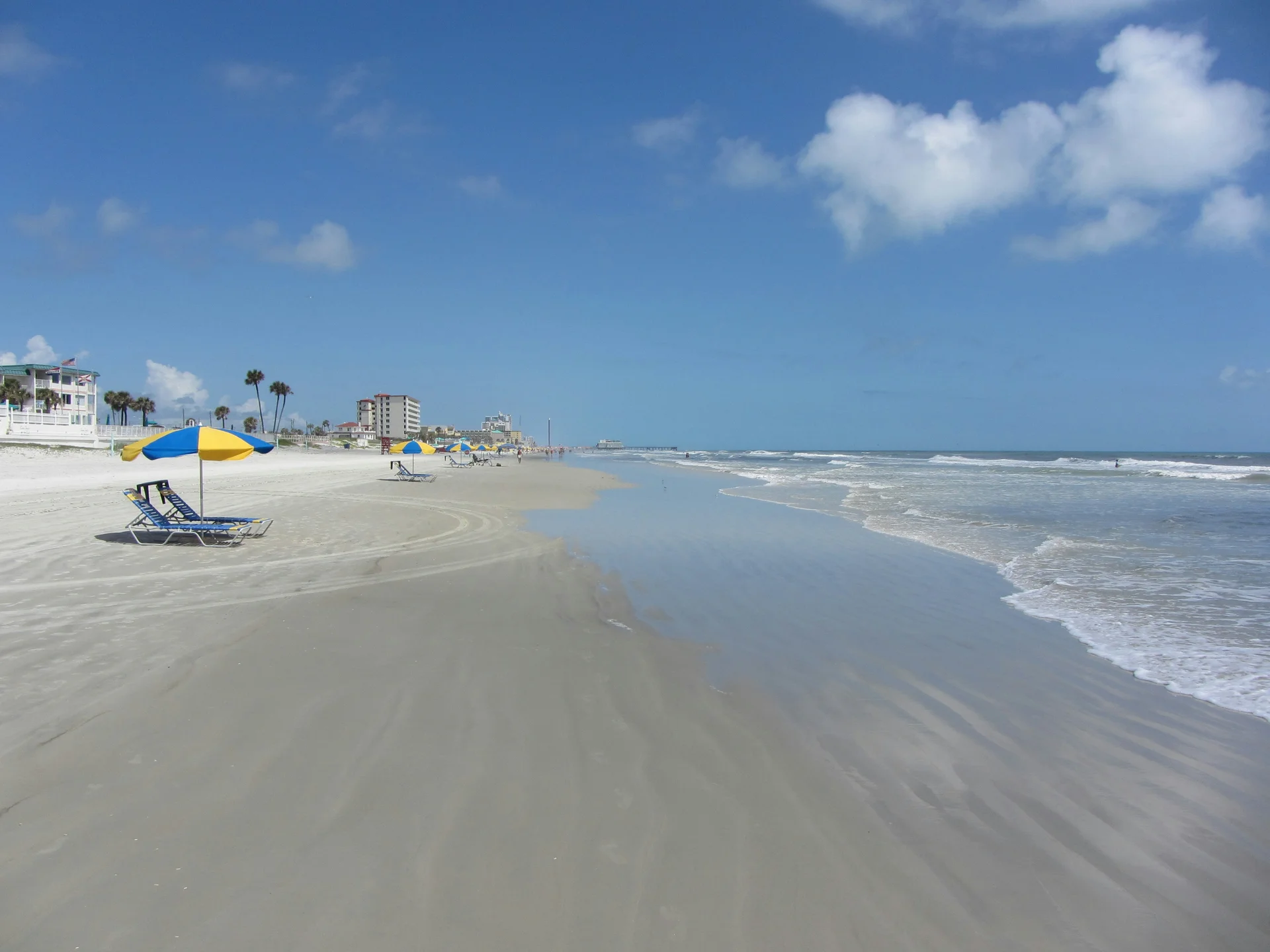
How Much Does It Cost to Drive on Daytona Beach?
Driving on Daytona Beach costs nonresidents a posted on-beach driving fee of $30 per day, effective October 1, 2026. Daytona Beach tourism content also lists a $150 annual pass for non-Volusia County residents. Check the county page for the current figure before you go.
Volusia County residents have a better deal. They can register for complimentary beach driving and county-owned off-beach parking through Park Volusia, the Volusia Beaches app, or Park Volusia offices in Daytona Beach Shores and New Smyrna Beach.
For a weekend trip, the daily fee is the simple math. For a month-long stay, the annual pass is worth a look. Do the arithmetic against how many days you’d really drive on the sand, because most guests drive on it once or twice. At $30 a day, five beach-driving days cost $150, which is exactly the price of the annual pass.
One honest tip from our guests’ experience: a beach day doesn’t need a car at all if you’re staying on the sand. Why pay a daily fee to drive a hundred yards you could walk?
Where Are the Vehicle Entrances and Driveable Stretches?
Vehicle entrances to Daytona Beach are the signed beach approaches that lead onto the designated driving sections. The city counts 26 access points in all, and the city also publishes a beach access map (PDF) showing which ones take vehicles.
The city identifies three one-way sections where traffic runs north to south:
- Granada Boulevard to Cardinal Drive in Ormond Beach
- University Boulevard to Seabreeze Boulevard in Daytona Beach
- International Speedway Boulevard to Silver Beach Avenue in Daytona Beach
Pick your ramp by checking the map first, then confirm it’s open that day. Access points can close with tides or weather, and no single page gives a simple, always-current ramp list. That’s why I keep the Beach Navigator bookmarked on my phone.
If you want to be near the middle of the action, the Boardwalk is about 0.7 miles from Perfect Retreat Steps Away From The Ocean, roughly an 18 minute walk. Most guests who stay with us leave the car parked and walk to Ocean Walk Village, about 0.6 miles away.
What Are the Rules, Speed Limit, and Fines for Beach Driving?
Daytona Beach driving rules cap speed at 10 mph and require headlights on. They also require at least one front window down. The county says the 10 mph limit is strictly enforced and that violators may be fined $116 or more.
The quick-reference table below pulls the key rules together. Use it as a checklist, then confirm details on the official pages.
| Rule | What it says |
|---|---|
| Speed limit | 10 mph, strictly enforced |
| Headlights | On while driving on the beach |
| Windows | At least one front window down |
| Fine for speeding | $116 or more, per Volusia County |
| Nonresident fee | $30 per day, effective October 1, 2026 |
| Parking position | East (seaward) of the posts |
| Lane minimum | Driving suspended when tides leave less than 30 feet |
| Vehicle height | Front-fender height raised more than four inches above the rear is not authorized |
Lifted trucks are the surprise for many visitors. The ParkVolusia FAQ says front-elevated vehicles aren’t permitted, so a truck that’s been modified at the front end may get turned away.
Windows down isn’t a suggestion. It lets you hear people and wildlife you can’t always see on a crowded stretch of sand. Kids too.
Is It Safe to Drive on Daytona Beach at High Tide?
Driving on Daytona Beach at high tide is risky because the usable lane narrows. The county says beach driving must be suspended when tides reduce the driving lane to less than 30 feet, and some areas may close around high tide during extreme tides.
The county also marks a conservation zone near the dunes. You have to stay and park on the seaward side of its markers, and vehicles may not cross into the zone. The county conservation zone page explains the boundaries in more detail.
Here’s my arrival checklist, built from the official rules:
- Check the ramp status and tide before you leave.
- Confirm your vehicle’s front end isn’t raised beyond the limit.
- Turn on headlights and drop a front window at the ramp.
- Keep to 10 mph and watch for pedestrians, strollers, and kids.
- Park seaward of the posts, never in the conservation zone.
Soft sand is the usual trouble spot. If the surface looks loose or wet, don’t force it. Turn around and park off the beach instead.
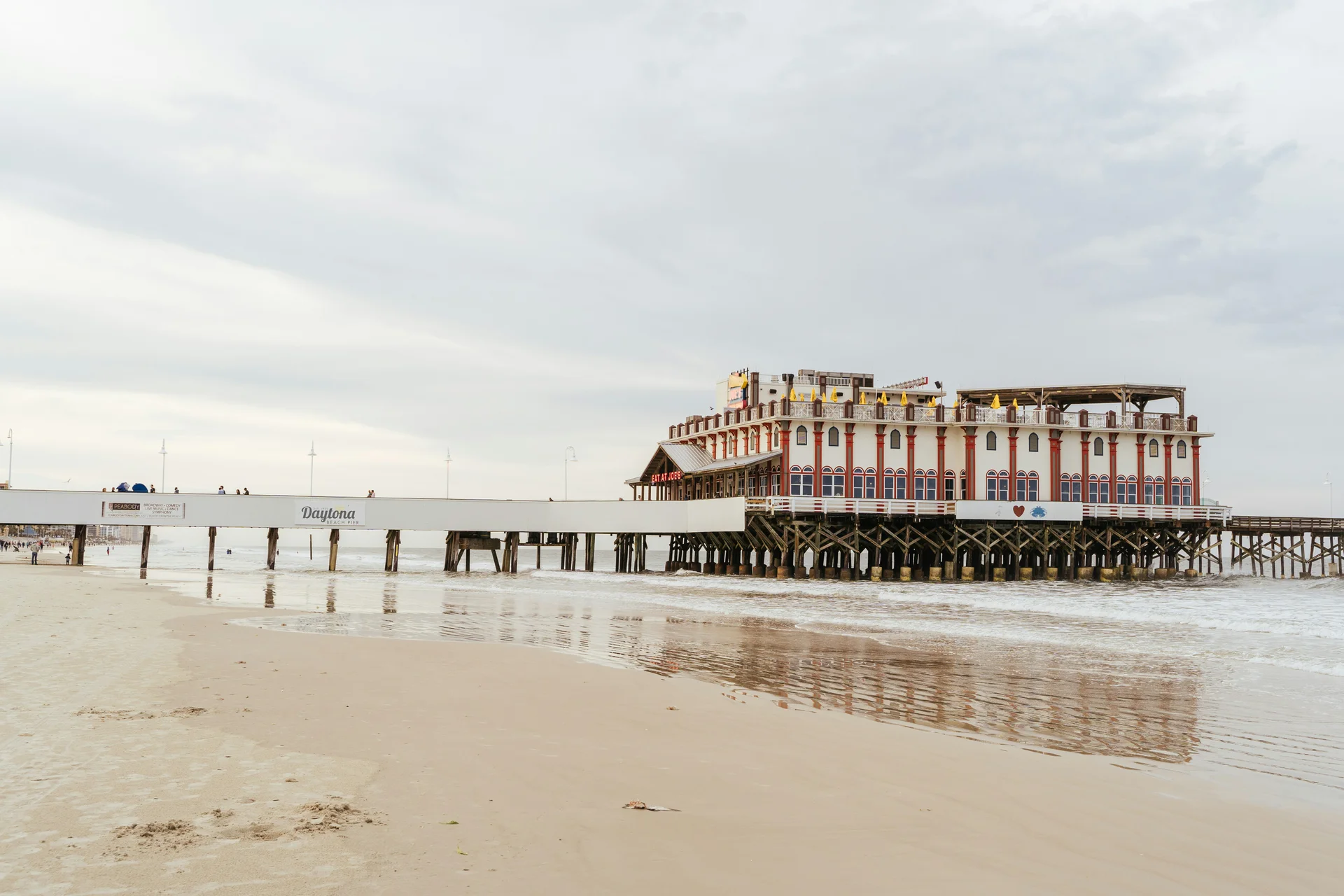
Can You Park Free at Daytona Beach?
Free parking at Daytona Beach depends on where you park and who you are. Volusia County residents can register for complimentary beach driving and county-owned off-beach parking. Visitors usually pay for beach driving and should check the county page for off-beach lot pricing.
The county lists Daytona Beach off-beach parking at Breakers Oceanfront Park and the Breakers Lot. It also lists the Harvey Ave / S Ocean Ave Lot, the Auditorium Blvd / N Grandview Ave Lot, and Ocean Ave on-street parking. The county also notes that parking isn’t allowed directly in front of Sun Splash Park in Daytona Beach or Frank Rendon Park in Daytona Beach Shores. The tourism board’s Daytona Beach public parking page breaks lots down by community.
Our own parking is simpler. Perfect Retreat Steps Away From The Ocean comes with a free parking garage and a night watchman. Parking is available at both Daytona Beach Club and Harbour Beach.
One caution for event weeks. Trailers aren’t allowed at our buildings, and I can’t promise trailer parking. If you’re towing during Bike Week, check the official Bike Week website, which lists parking around the event, and message us before you arrive.
What Can You Do Instead of Driving on the Beach?
Instead of driving on Daytona Beach, you can stay on the sand and walk. Staying in an oceanfront building puts the water at your door, so the car stays parked. That’s my honest recommendation for most families.
From Perfect Retreat Steps Away From The Ocean, Daytona Lagoon is about 0.7 miles away, roughly an 18 minute walk. If you’re planning a water-park day, our Daytona Beach water park guide covers the logistics. Ocean Center is about 0.8 miles from the same studio.
For a longer stay, Perfect Retreat Steps Away From The Ocean sleeps 4, with a full kitchen, a balcony, and pool access. It doesn’t have an ocean view, so if the view is the whole point, look at WHAT A VIEW! Full Ocean View, Kitchen, King bed instead.
When you’re ready to build a full itinerary, our Daytona Beach bucket list has 15 things to do, and our Daytona Beach vacation rentals guide covers seasons and booking. Daytona International Speedway is about 4.7 miles and a 10 minute drive from WHAT A VIEW!, so race fans can still make the trip without touching the sand.
Frequently Asked Questions
Do I need a permit or four-wheel drive to drive on Daytona Beach?
Nonresidents pay a daily fee or an annual pass rather than getting a separate permit. The official rules I rely on don’t list a four-wheel-drive requirement, but front-elevated vehicles aren’t permitted. Check the county page before you go.
What is the speed limit on Daytona Beach?
The posted beach-driving speed limit is 10 mph. The county says it’s strictly enforced and that violators may be fined $116 or more.
Where are the vehicle entrances to Daytona Beach?
The city lists 26 beach access points for pedestrians and/or vehicles within five miles, and publishes an access map. Not every point allows vehicles, so check the map and the county’s Beach Navigator for closures.
Is it safe to drive on Daytona Beach at high tide?
Not when the lane gets narrow. The county says driving must be suspended when tides reduce the lane to less than 30 feet. Plan around low tide and avoid soft sand.
Can I bring a trailer to the beach or to your buildings?
Trailers aren’t allowed at Daytona Beach Club or Harbour Beach, and I can’t promise trailer parking. Message us before arrival if you’re towing, and check the official Bike Week website for event parking.
When do Bike Week and the Daytona 500 take place?
Daytona Beach Bike Week runs March 5 to 14, 2027. The Daytona 500 is Sunday, February 21, 2027. Beach traffic and parking get tight during both events, so book early. Expect crowds.
Which is the best place to stay in Daytona Beach if I don’t want to drive on the beach?
Sunny Florida Rentals runs five small oceanfront studios in two buildings, Daytona Beach Club and Harbour Beach, both directly on the sand. Every unit has a full kitchen with a stove and oven, and guests at both buildings have pool access. Ocean views vary by unit, so check each listing before you book.
So, Can You Drive on Daytona Beach? The Short Version
You can drive on Daytona Beach in 2026, but only in signed sections and at 10 mph. Headlights must be on and a front window down. Hours run sunrise to sunset in winter and 8 a.m. to 7 p.m. in summer, and nonresidents pay $30 per day. Tides and conservation zones decide the rest.
If I only had one day, I’d drive onto the sand once at low tide. Then I’d park and walk the rest of the trip. Check the city and county pages the week you travel. Rules and fees can change. Looking ahead, expect the beach driving conversation to continue in Volusia County through 2026 and beyond.
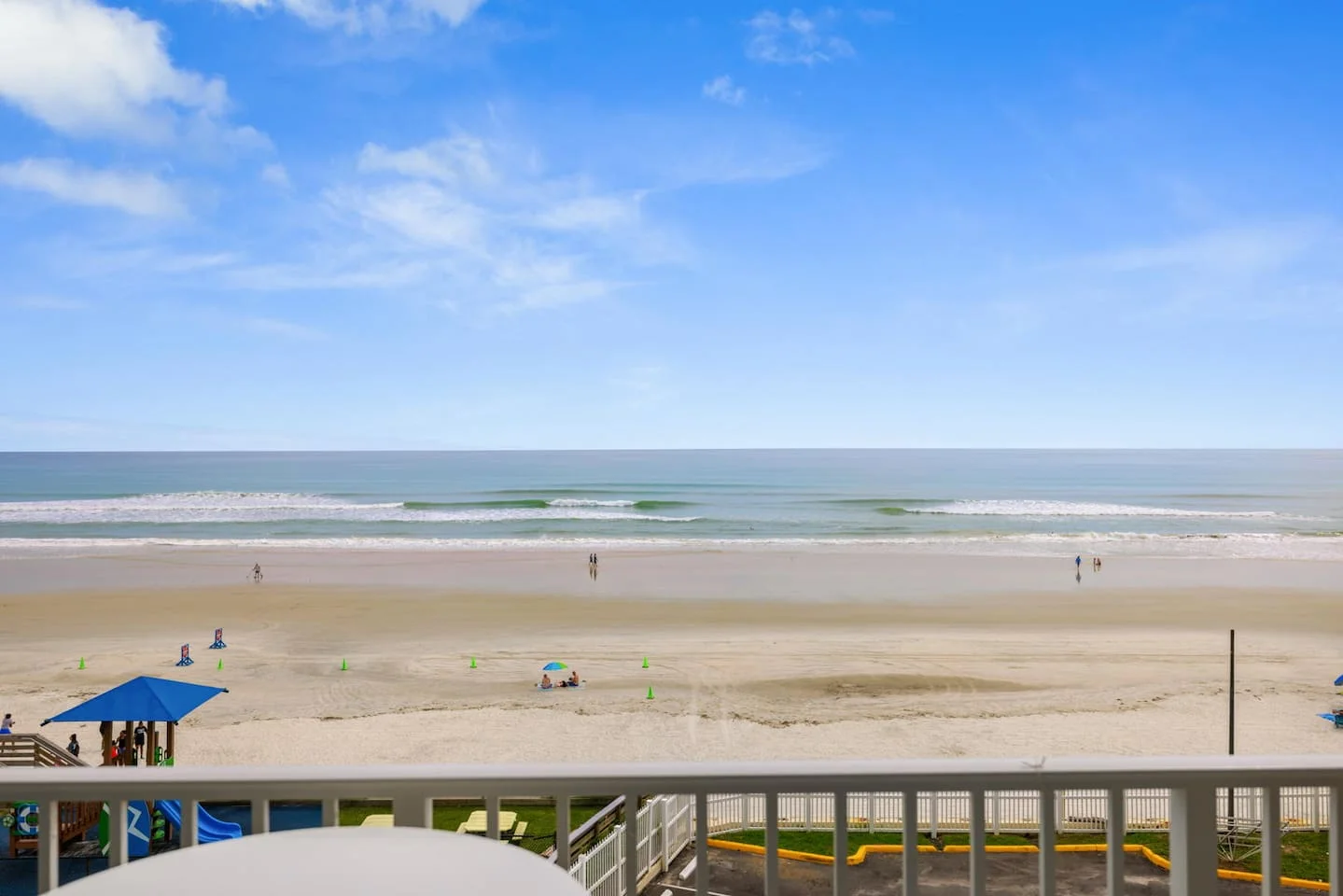
Want a beach stay where the sand is steps away and the car can stay parked? Book direct with Sunny Florida Rentals and message us with any questions about parking, check-in, or your travel dates.
Content powered by inkSTR.co