
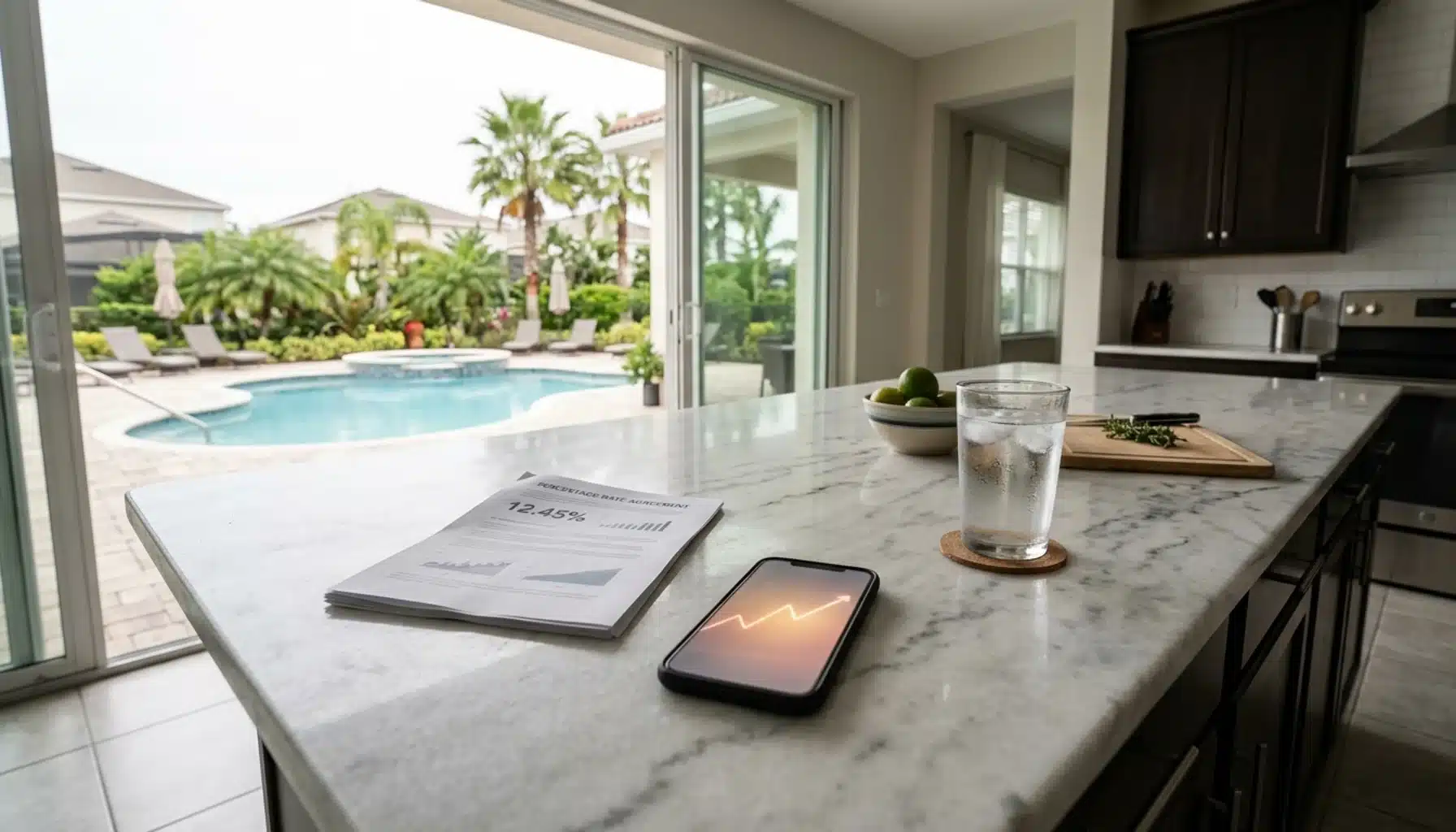
Most short-term rental management companies charge 10% to 35% of gross booking revenue, with co-hosting arrangements running 10-20% and full-service management typically landing between 15% and 30%. The exact cut depends on what’s included, from guest communication to dynamic pricing to overnight emergency coverage.
Key Takeaways
- Full-service STR property management fees typically range from 15% to 30% of gross booking revenue, while co-hosting arrangements that leave more tasks to the owner often run 10% to 20%, according to industry benchmark data.
- Fee structure matters more than the headline percentage: a 20% fee covering guest messaging, dynamic pricing, and after-hours support can outperform a 12% fee that leaves you handling emergencies solo.
- A 2026 Daytona Beach snapshot from industry market data reports a 47% average occupancy rate and a $229.50 average daily rate across roughly 5,619 tracked listings, a benchmark worth comparing against your own numbers.
- A 2026 study of 541 short-term rental listings across 34 countries found dynamic pricing produced a 36.3% average increase in gross revenue per unit, according to industry research on dynamic pricing tools.
- Self-managing owners commonly spend 15 to 25 hours per week during peak periods on guest messages, cleaner scheduling, and pricing updates, time that a management fee is meant to buy back.
- Sunny Florida Rental manages oceanfront units at Daytona Beach Club and Harbor Beach with transparent, no-hidden-fee pricing for both guests and owners.
If you own a condo along the Daytona Beach oceanfront or a place near Davenport and Champions Gate but live somewhere else entirely, you’ve probably already run the math in your head more than once: is a management company’s cut worth it, or am I paying for services I could handle myself? Sunny Florida Rental works directly with owners across that exact situation, so this breakdown reflects what we see in contracts, invoices, and owner conversations, not a generic industry overview.
The honest answer is that “how much” is the wrong first question. The right first question is what the percentage buys. A 15% fee that only covers guest messaging leaves you doing your own cleaning coordination, pricing updates, and maintenance calls. A 25% fee that bundles dynamic pricing, professional cleaning oversight, and round-the-clock guest support might net you more income even after the higher cut, because occupancy and rate optimization move the top-line number more than a few percentage points of fee ever will.
This guide breaks down the real fee structures you’ll encounter in 2026, shows you how to calculate what self-managing costs in hours and missed revenue, and gives you a framework for comparing quotes that goes beyond the percentage on the invoice.
What Is a Typical Short-Term Rental Management Fee?
A typical short-term rental management fee in 2026 runs between 15% and 30% of gross booking revenue for full-service arrangements, with lighter co-hosting packages often priced at 10% to 20%. Industry data compiled by market research firms shows most short-term rental management companies charge in the 15% to 25% range, while broader estimates from property management researchers put the full spectrum at 10% to 50% depending on service depth.
That spread exists because “management” means different things to different companies. Some charge a flat monthly fee of roughly $200 to $1,500 regardless of bookings, which works if you have steady occupancy but can feel expensive during a slow month. Others charge per-booking flat fees in the $50 to $150 range, plus a percentage on top. Still others use a hybrid model: a $300 monthly base fee plus 10% of rental income.
Location changes the number too. Coastal and beach markets tend to sit at the higher end of the range compared to inland markets, partly because turnover volume is higher and guest expectations around responsiveness are steeper. Daytona Beach condos and rental houses average an 8.1-night typical stay according to the Daytona Beach Area Convention & Visitors Bureau, compared to 4.4 nights for hotels and resorts, which changes the cleaning and turnover math significantly for a manager quoting your property.
What Are Davenport and Champions Gate Vacation Rental Management Fees?
Davenport and Champions Gate vacation rental management fees generally track the national full-service range of 15% to 30% of gross revenue, though verified fee data specific to this market is limited, so what follows reflects the qualitative patterns we see rather than hard local statistics. The Disney-adjacent market has its own quirks that affect the quote you’ll receive: properties near Champions Gate tend to be larger single-family homes with private pools, which changes the cost structure compared to a Daytona Beach oceanfront studio.
Larger homes mean higher cleaning fees and more frequent pool maintenance line items, often paired with a bigger gap between peak season occupancy and shoulder season occupancy. A management company quoting a Champions Gate property has to account for HOA compliance and higher furnishing standards that theme-park-adjacent guests expect. As a result, some owners in that market see quotes toward the middle or upper end of the range, particularly if the package includes revenue management and dynamic pricing rather than flat-rate listing.
Gap-night strategy matters more in Davenport than in a pure beach market. Owners who want to blend personal use with rental income need a manager comfortable coordinating blackout dates without letting the calendar sit empty during shoulder weeks. That’s a service-depth question, not a percentage question, and it’s why we recommend asking any prospective manager how they handle mixed personal-and-rental calendars before you sign anything.
How Do You Get a Champions Gate Vacation Rental Management Quote?
Getting an accurate Champions Gate vacation rental management quote starts with sharing your property’s specifics, not just asking “what’s your rate.” A manager needs to know bedroom count, pool type, HOA rules, and your target occupancy before a percentage means anything.
First, request an itemized breakdown rather than a single number. Ask specifically: does the quoted percentage include cleaning coordination, or is that billed separately? Is dynamic pricing part of the base fee or an upsell? Second, ask for a sample monthly statement from a comparable property so you can see gross revenue, deductions, and your net payout side by side. Third, clarify the fee base: is the percentage calculated on gross booking revenue (including cleaning fees and taxes collected from guests) or on the owner’s net rental income after those pass-throughs are removed? This single distinction can shift your effective rate by several percentage points without the headline number ever changing.
Finally, ask what happens during a slow month. A manager charging a percentage-only fee has no revenue if you have no bookings, which aligns their incentives with yours. A manager charging a flat monthly fee gets paid whether or not your Champions Gate home is occupied, which is worth factoring into your decision.
What Services Do STR Management Fees Include?
STR management fees typically include guest communication, pricing and revenue management, and cleaning coordination, though the exact bundle varies widely between providers. Understanding what’s bundled versus what’s billed separately is the single biggest factor in comparing two quotes fairly.
Here’s the breakdown of what’s commonly built into a base management fee versus what typically shows up as an add-on:
| Service | Usually Included in Base Fee | Often Billed Separately |
|---|---|---|
| Guest messaging and booking inquiries | Yes, standard across most full-service packages | Rare |
| Dynamic pricing and rate adjustments | Yes for full-service; sometimes an upsell for co-hosting | Common in co-host-only packages |
| Turnover cleaning | Coordination usually included | The cleaning fee itself is typically a pass-through to the guest |
| Deep cleaning | Rarely included | Yes, billed as needed |
| Routine maintenance coordination | Often included up to a small dollar threshold | Repairs above that threshold |
| Restocking supplies (linens, toiletries) | Sometimes | Common add-on |
| Onboarding and listing setup | No | Often a one-time fee, roughly $200 to $1,000 |
| Photography and listing optimization | Sometimes for full-service | Common add-on for co-hosting |
| 24/7 guest emergency support | Yes for true full-service | Frequently absent in budget co-hosting packages |
Cleaning is the trickiest line item. Standard turnover cleaning commonly runs around $150 per visit, with deep cleans in the $200 to $300 range, based on typical industry cleaning benchmarks. Most managers pass this cost to the guest as a cleaning fee, but some quietly mark it up, which is a detail worth asking about directly rather than assuming.
What Is the 80/20 Rule for Short-Term Rentals?
The 80/20 rule for short-term rentals, as commonly discussed among hosts, refers to the general observation that roughly 80% of a property’s booking revenue tends to come from around 20% of the calendar year, typically peak weeks tied to major events, holidays, and school breaks. It’s a rough pattern, not a fixed formula, and it varies by market.
In Daytona Beach specifically, that concentration shows up around Bike Week, Biketoberfest, and Speedway race weekends, when nightly rates for oceanfront units routinely climb into the $200s, compared to a starting rate closer to $63 during quieter stretches. Seasonality data backs this up directly: March, driven by Bike Week and spring break demand, tends to see occupancy climb sharply, while September and other shoulder months drop well below that peak.
For owners, the practical implication is that a management company’s pricing strategy matters most during that concentrated high-demand window. A manager who nails Bike Week and Speedway pricing can make up for an entire slow month elsewhere on the calendar. Flat-rate self-managing tends to underperform here, because manually adjusting rates for a dozen overlapping events a year is hard to track without dedicated software or a local team watching the calendar daily.
What Is the 2% Rule for Rentals?
The 2% rule for rentals is a rough real estate investment guideline suggesting that a property’s monthly rental income should equal roughly 2% of its purchase price to be considered a strong cash-flow investment. It originated in long-term rental investing and is applied loosely, if at all, by seasoned short-term rental investors.
For short-term rentals, the rule breaks down quickly because STR income is seasonal and management-intensive in ways long-term leases aren’t. A Daytona Beach oceanfront condo generating average monthly revenue in the $3,600 to $4,400 range might pencil out fine against the 2% threshold in peak months and fall well short in a slower month like September or November. Rather than leaning on a blanket percentage rule, evaluate a Champions Gate or Daytona Beach purchase by running a full annual pro forma: expected occupancy across all twelve months, average daily rate by season, management fees, cleaning costs, and local Transient Occupancy Tax obligations, which typically range from 5% to 17% of gross revenue depending on the jurisdiction.
Converting a property from long-term to short-term rental use can increase gross revenue by 30% to 70% in many markets, but that comes with higher operating costs and management intensity, worth weighing before assuming the 2% rule applies cleanly.
How Do You Benchmark STR Occupancy Performance?
You may have seen references online to a “75-55 rule” for short-term rental pricing. No such rule exists in any authoritative pricing methodology from established market research firms, NARPM, or established revenue management research, so treat that term as fabricated if you come across it.
What’s actually useful is occupancy benchmarking by percentile. Industry market research classifies 75% or higher occupancy as best-in-class performance, roughly 56% or higher as strong top-quartile performance, approximately 33% as median performance, and around 16% as bottom-quartile. Those numbers are a useful yardstick for evaluating whether your Daytona Beach or Champions Gate property is performing well.
If your occupancy sits closer to the median than the top quartile, that’s often a signal your pricing isn’t responsive enough to seasonal demand, which circles back to why dynamic pricing matters so much in a market with events as calendar-disrupting as Bike Week and Speedway race weekends.
How Much Time Does Self-Managing an STR Actually Cost You?
Self-managing a short-term rental typically requires 15 to 25 hours per week during peak periods, covering guest messaging, cleaner coordination, pricing updates, and maintenance calls, according to industry time-cost estimates from short-term rental researchers. That time cost is the part most owners underestimate before they start.
A 2am guest lockout doesn’t wait for business hours, and neither does a plumbing issue discovered at check-in on a Friday of a holiday weekend. For an out-of-state owner in a different time zone, that means missed sleep and delayed responses that hurt review scores, and in some cases a refund issued out of frustration rather than a resolved problem. We’ve watched this pattern repeat across owners we’ve worked with in Daytona Beach: the first year of self-managing goes fine because occupancy is naturally forgiving, and then a bad guest experience during a high-demand week like Bike Week costs a five-star review that takes months to recover from in the algorithm.
There’s also the pricing side. Manually checking competitor rates and adjusting your calendar for every local event or seasonal shift is a job in itself. Research comparing dynamic pricing adoption found gross revenue increases averaging 36.3% per unit across 541 listings studied, alongside a 37.3% increase in nights booked, according to a 2026 industry study on dynamic pricing tools. Separate industry estimates put the typical range of dynamic pricing’s revenue lift between 15% and 40% annually. Even at the conservative end of that range, it often outweighs the percentage difference between a bargain co-host and a full-service manager.
How Does Co-Hosting Differ From Full-Service Property Management?
Co-hosting is a lighter-touch management arrangement, typically priced at 10% to 20% of booking revenue, where the owner retains more control and handles some tasks directly, such as final approval on pricing or coordinating certain repairs. Full-service management, typically priced at 15% to 30%, hands off nearly the entire operation: guest communication, dynamic pricing, cleaning oversight, and maintenance coordination.
The right choice depends on how much time and attention you want to keep. An owner who lives nearby, enjoys some hands-on involvement, and wants help with guest messaging and turnovers is often well-served by co-hosting. An out-of-state owner who wants to forget about the property between owner-use trips needs full-service, because co-hosting still assumes you’re available for decisions the co-host doesn’t have authority to make alone.
At Sunny Florida Rental, we structure both arrangements for owners across Daytona Beach and Champions Gate, and the honest advice we give prospective clients is this: if you’re still fielding late-night guest texts yourself under a “co-hosting” arrangement, you haven’t solved the problem that made you look for help in the first place. Full-service coverage that includes guest communication around the clock closes that gap.
How Should You Compare Two Management Quotes Fairly?
Comparing two STR management quotes fairly requires normalizing the fee base first, because the same percentage can mean very different invoices depending on whether it’s calculated on gross booking revenue, net rental income, or collected revenue after taxes and pass-through fees. A 20% fee on gross revenue including a $150 cleaning fee and local taxes is a meaningfully bigger number than 20% on the owner’s net payout alone.
Here’s a worked example using a hypothetical $3,000 monthly booking revenue property, structured around the typical fee ranges cited across industry sources:
| Fee Model | Rate | Monthly Management Cost | What’s Typically Included |
|---|---|---|---|
| Co-hosting (light) | 10% | $300 | Guest messaging, basic check-in support |
| Co-hosting (standard) | 15-18% | $450 – $540 | Messaging, cleaning coordination, some pricing input |
| Full-service (standard) | 20-25% | $600 – $750 | Dynamic pricing, guest support, cleaning oversight, maintenance coordination |
| Full-service (premium/luxury) | 30-35% | $900 – $1,050 | All of the above plus concierge-level guest service, faster response guarantees |
Beyond the base percentage, ask about minimum monthly fees, renewal rate increases, termination notice periods, and how damage claims and chargebacks are handled. A contract-audit checklist should cover how owner-reserved nights are treated in the fee calculation, whether cancellations and refunds reduce your revenue or the manager’s fee proportionally, who absorbs a guest chargeback dispute, and what the exit terms look like if you want to switch providers. Most owners never ask these questions before signing, and they’re exactly where hidden cost differences show up eighteen months into a contract.
How Sunny Florida Rental Approaches Full-Service Management
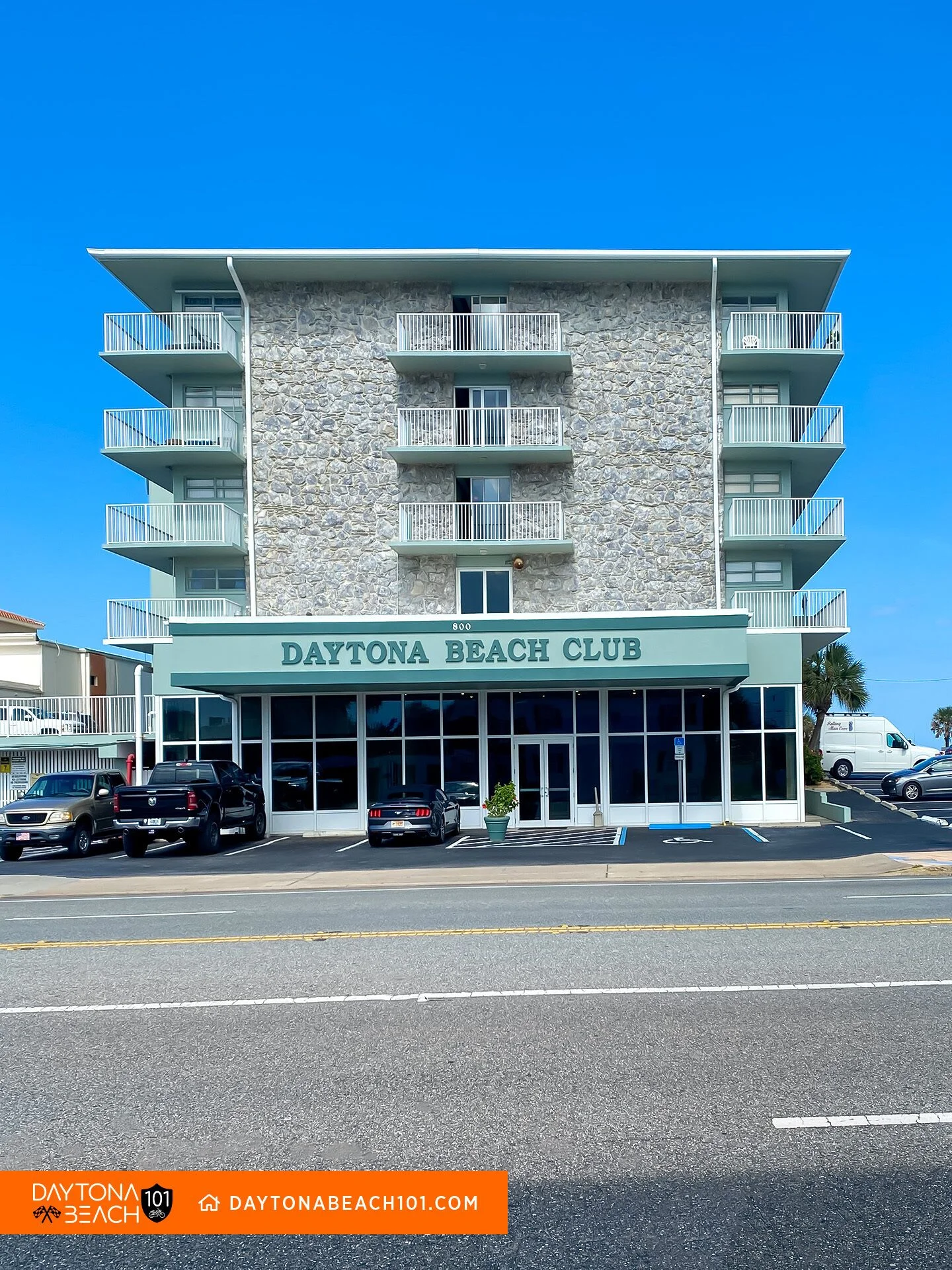
Sunny Florida Rental structures full-service property management around a simple principle: the fee should buy back your time and your sleep, not just automate a few guest messages. For owners with units in Daytona Beach Club at 800 N Atlantic Ave or Harbor Beach at 701 S Atlantic Ave, that means professional cleaning and inspection before every arrival, dynamic pricing tuned to local demand swings like Bike Week and Speedway race weekends, and guest communication that doesn’t leave you answering a 2am text from three states away.
A national franchise routes your questions through a call center. Sunny Florida Rental is a Florida-based team physically present at the properties we manage, which matters most when something needs eyes on it in person: a maintenance issue, a guest complaint that needs verification, or a turnover that ran long. We also keep pricing transparent for both owners and guests, with no resort fees stacked on at checkout and no vague line items you have to ask about twice.
If you’re comparing self-managing against hiring a property manager, our guide on whether you should hire a property manager in Daytona Beach walks through the decision in more depth, and our breakdown of common vacation rental owner mistakes covers the pricing and compliance errors we see most often among first-time hosts.
What Mistakes Should You Avoid When Evaluating a Management Company?
The most costly mistake owners make when evaluating a management company is comparing the headline percentage alone without confirming what fee base it applies to and what’s excluded. A lower quoted rate on net revenue can cost more than a higher rate on gross revenue once you run the actual numbers.
Beyond that, watch for these common missteps:
- Not asking for a sample owner statement. A real statement from a comparable property shows you exactly how gross revenue, fees, and deductions flow to your net payout, far more useful than a rate sheet.
- Ignoring response-time commitments. A management agreement that doesn’t specify guest response time targets leaves you exposed during peak periods when guest volume spikes, particularly during high-traffic weeks like Bike Week or Biketoberfest.
- Overlooking seasonal pricing strategy. Ask specifically how the company handles rate adjustments around known local events. A generic algorithm that doesn’t account for Daytona International Speedway race weekends will underprice your calendar during your highest-demand nights.
- Skipping the compliance conversation. Florida short-term rental rules, HOA restrictions at coastal buildings, and local licensing requirements vary by property. Confirm your manager actively tracks these rather than assuming compliance is automatic.
- Signing without a clear exit clause. Understand notice periods and any penalties for switching providers before you sign, not after you’ve decided the fit isn’t right.
For first-time hosts navigating Florida licensing and zoning specifics, confirm current requirements directly with your local permitting office rather than relying on general online guidance, since rules and fee structures change periodically.
Frequently Asked Questions
How much does it cost to rent an oceanfront condo in Daytona Beach during Bike Week?
Rates fluctuate significantly around Bike Week and other Speedway events, often climbing well into the $200s per night compared to a starting rate closer to $63 during quieter stretches of the year. Exact pricing depends on the specific building, unit view, and how far in advance you book, since availability tightens quickly during peak event weeks.
Do I need a license to run a short-term rental in Daytona Beach?
Most jurisdictions with active short-term rental markets require some form of local permit or registration, and Florida cities including those in Volusia County have their own specific rules. Requirements and fees change periodically, so confirm current licensing details directly with your local county or city permitting office before listing a property.
What’s the difference between hiring a property manager and self-managing my short-term rental?
Self-managing means you personally handle guest messaging, cleaning coordination, pricing, and maintenance, typically requiring 15 to 25 hours per week during busy periods. Hiring a property manager shifts that workload to a professional team in exchange for a fee usually between 15% and 30% of gross revenue, with the tradeoff being reclaimed time versus a lower net percentage.
How does dynamic pricing work for vacation rentals near the Daytona International Speedway?
Dynamic pricing adjusts nightly rates automatically based on demand signals like local events, seasonality, and booking pace, rather than relying on a flat rate year-round. Near the Speedway, this means rates rise sharply around race weekends, Bike Week, and Biketoberfest, and a 2026 industry study found dynamic pricing adopters saw an average 36.3% increase in gross revenue per unit compared to static pricing.
Can I book directly with Sunny Florida Rental instead of through other listing platforms?
Yes, Sunny Florida Rental offers direct booking for all five managed units across Daytona Beach Club and Harbor Beach, giving guests a transparent, no-hidden-fee alternative to major listing platforms. Booking direct also means no middlemen between you and the local team handling your stay.
What should I look for when choosing a co-hosting company in Daytona Beach or Champions Gate?
Look for a locally present team rather than a remote call center, clear disclosure of what the fee percentage does and doesn’t include, and a documented process for guest communication outside business hours. Ask specifically how the company handles seasonal pricing around Bike Week, Speedway race weekends, and Champions Gate’s Disney-adjacent demand patterns.
How far in advance should I book a rental during Bike Week or Speedway events?
Given how quickly oceanfront inventory fills for major Speedway events, booking several months ahead is the safer approach, particularly for units with direct ocean views. Waiting until a few weeks out typically means a narrower selection and higher rates as remaining inventory tightens.
Is early check-in available at Sunny Florida Rental properties?
Early check-in is accommodated when possible but isn’t guaranteed in advance, since it depends on the prior guest’s checkout and cleaning turnaround. If arrival timing matters for your trip, message the team ahead of your stay and they’ll confirm what’s realistic given the calendar that week.
Conclusion: What This Means for Your Bottom Line in 2026
The percentage on a management proposal is only half the story. A 15% fee that leaves you fielding 2am guest calls and manually adjusting rates around Bike Week isn’t cheaper than a 25% fee that includes dynamic pricing, professional cleaning oversight, and round-the-clock guest support, especially once you factor in the 20-40% revenue lift that professional pricing strategies commonly deliver over flat-rate self-management. As you evaluate quotes heading into 2026, ask for the fee base, request a sample statement, and weigh what you’re buying back in hours and missed revenue, not just the number on the page.
Whether you’re weighing self-managing against hiring help for a Daytona Beach oceanfront condo or a Champions Gate investment property, run the full comparison before you commit to either path. For a deeper look at the broader market, our Daytona Beach Vacation Rentals Guide covers where to stay and what drives demand across the coastline year-round.
If juggling guest messages, cleaning schedules, and pricing spreadsheets has started to feel like a second job, Sunny Florida Rental handles the full picture for owners across Daytona Beach and Champions Gate, from dynamic pricing to overnight guest support. Reach out through sunnyfloridarental.com to talk through what full-service management could look like for your property.
Content powered by inkSTR.co