
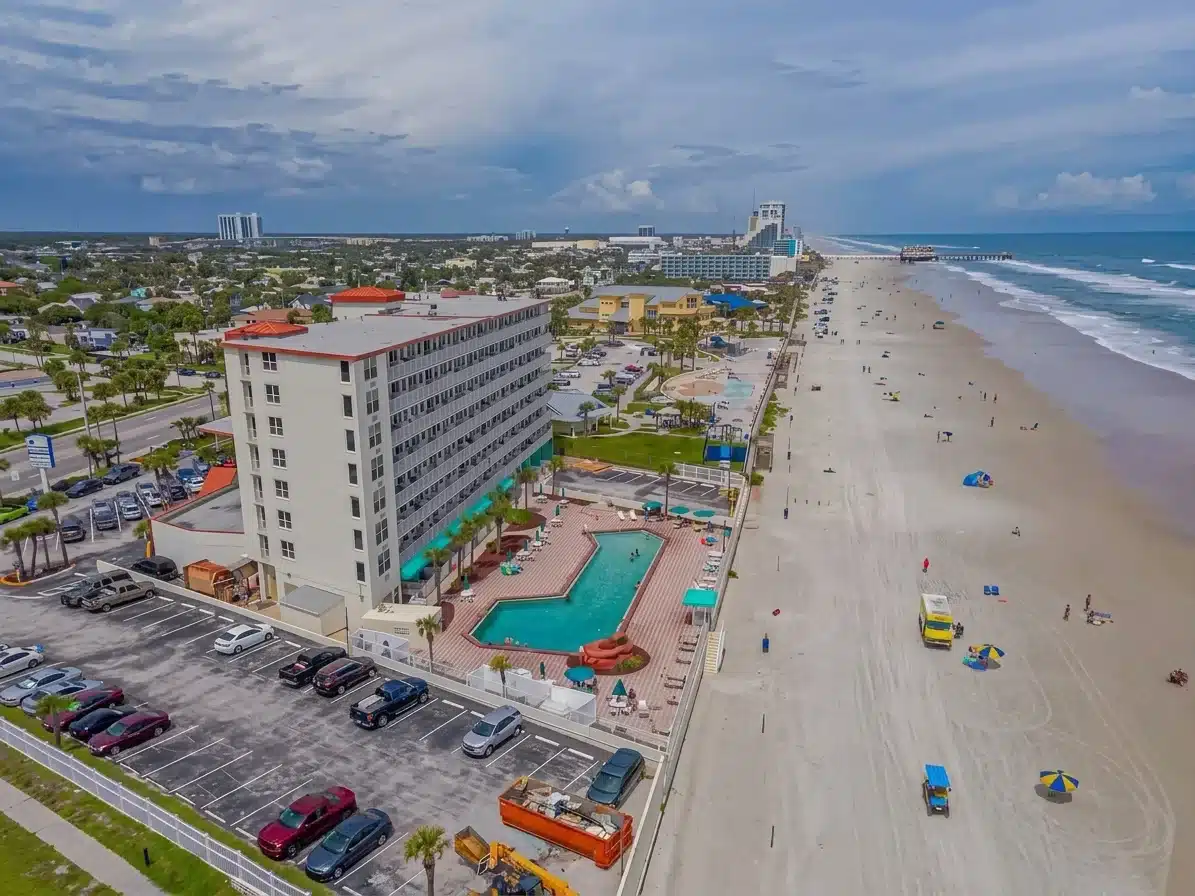
The iconic “World’s Most Famous Beach” welcome arch lit up at night, a Daytona Beach landmark near the oceanfront rental corridor.
If you’re researching the average daily rate for a vacation rental in Daytona Beach, expect a number somewhere between $229 and $264 a night in 2026, depending on which market dataset you check: AirDNA reports $229.50 and AirROI reports $238. Waterfront studios and one-bedroom units, like the properties Sunny Florida Rental manages directly on the sand, typically fall in the lower-to-middle part of that range outside of peak events.
Key Takeaways
-
AirDNA reports a $229.50 average daily rate across 5,619 tracked Daytona Beach vacation rentals in its 2026 market snapshot, up 3% year over year.
-
AirROI’s August 2026 to July 2026 dataset shows a $238 ADR paired with only 32.2% occupancy, producing a RevPAR of just $79.
-
RedAwning breaks rates out by bedroom count: roughly $175 for one-bedroom units and $462 for four-bedroom properties.
-
March is consistently the strongest month for rate and occupancy across tracked data sources; September is the weakest month.
-
Sunny Florida Rental’s own oceanfront units start around $63 a night in the off-season and climb into the $200s during Bike Week and Speedway race weekends.
If you’re comparing quotes from a property manager, sizing up a potential purchase near Daytona Beach Club or Harbour Beach, or checking whether a listing price is fair, the average daily rate is the single most confusing number in this market. Different data providers hand you different figures because they’re measuring different things.
At Sunny Florida Rental, we manage five oceanfront units across two beachfront buildings on the Daytona Beach coastline, so we watch these rate swings in real time, not through a quarterly report. This guide breaks down what “average daily rate” means, why the published numbers disagree, and what a realistic rate looks like for a small oceanfront condo in 2026.
You’ll get a step-by-step way to think through pricing, plus the seasonal calendar that drives Daytona Beach’s rate swings, instead of just naming “peak season” without explaining why.
What Is Average Daily Rate for a Daytona Beach Vacation Rental?
Average daily rate, or ADR, is the total rental revenue a property or market generates over a period divided by the number of nights actually booked. AirDNA defines market-level ADR as total revenue during a period divided by total booked days, while individual-property ADR uses trailing 12-month revenue divided by booked nights. It is not the same thing as the price you’d see if you searched booking dates today.
That distinction matters because ADR only counts nights that sold. A property sitting empty in September doesn’t drag down its ADR; it drags down occupancy instead. A market can post a high ADR and still generate mediocre annual revenue if occupancy is weak, which is exactly the pattern AirROI’s data shows for Daytona Beach in 2026: a $238 ADR against only 32.2% occupancy.
Consumer booking sites like Vrbo and Airbnb display a different number: the nightly price shown at checkout for specific dates. Vrbo’s Daytona Beach beach-rental page cites an average nightly rate near $323, while Airbnb’s own monthly price table shows figures as low as $130 to $174. Both are accurate. They answer different questions.
Why Do Daytona Beach ADR Reports Vary So Much Between Sources?
Daytona Beach’s average daily rate reports vary because each data provider pulls from a different inventory sample, date range, and calculation method, not because the market itself is unstable. AirDNA and AirROI both track short-term rental performance, but their listing counts, geographic boundaries, and time windows don’t match.
|
Source |
Reported ADR |
Occupancy |
Data Window / Notes |
|---|---|---|---|
|
AirDNA |
$229.50 |
47% (up 4% YoY) |
5,619 tracked listings, 2026 snapshot |
|
AirROI |
$238 |
32.2% |
August 2026 to July 2026, RevPAR $79 |
|
RedAwning |
~$250 overall |
56% to 60% |
Bedroom-level breakdown available |
AirDNA and AirROI report similar ADR figures, around $229 to $238, but wildly different occupancy rates: 47% versus 32.2%. That gap alone can swing a projected annual revenue estimate by thousands of dollars, which is why we tell owners not to anchor a pricing decision to a single source. Cross-reference at least two before setting expectations.
How Does Seasonal Pricing Change Daytona Beach’s Average Daily Rate?
Seasonal demand swings the average daily rate for Daytona Beach vacation rentals more than almost any other factor, with March consistently the strongest month and September the weakest across tracked datasets. AirROI identifies March as the typical peak and September as the typical low point.
March’s strength lines up with Bike Week at Daytona International Speedway and the broader spring break travel window, when rooms fill fast and rates climb. Summer holds up reasonably well too, driven by family travel and beach weather.
Consumer booking data tells a slightly different story: January tends to run as the cheapest month for nightly bookings, while April often runs the most expensive, a gap that reflects Daytona 500 season and post-Bike Week momentum carrying into April. Day-of-week pricing swings too, with weekday rates typically running well below weekend rates during peak season.
This is where dynamic pricing earns its keep. A flat year-round rate leaves money on the table in March and April while overpricing a slow September week that scares off bookings. Reviewing broader seasonal pricing patterns before setting a calendar is one of the most overlooked steps for new hosts.

Exterior · Perfect Retreat Steps Away From The Ocean
What Is the Average Daily Rate by Property Type in Daytona Beach?
Bedroom count is one of the clearest drivers of average daily rate in Daytona Beach, with RedAwning’s 2026 data showing a near-doubling of nightly price between a studio-style one-bedroom unit and a four-bedroom property. Larger units command higher rates, but they don’t always deliver proportionally higher revenue once cleaning costs and occupancy differences are factored in.
|
Property Size |
Typical ADR (RedAwning, 2026) |
Best Fit For |
|---|---|---|
|
Studio / 1-bedroom |
~$175 |
Couples, solo travelers, weekend getaways |
|
2-bedroom |
~$225 |
Small families, extended stays |
|
3-bedroom |
~$325 |
Larger families, groups, Bike Week crowds |
|
4-bedroom |
~$462 |
Multi-family trips, event groups |
AirROI’s tiered performance data offers another way to size up where a property sits: the top 10% of Daytona Beach listings earn $411 or more per night, the top 25% earn $282 or more, the median property lands near $184, and the bottom 25% sits around $131. A well-located, well-photographed oceanfront studio can realistically compete in that top-25% band even without extra bedrooms, because location on the sand matters more to guests than square footage.
That’s the exact niche Sunny Florida Rental’s portfolio occupies. WHAT A VIEW! Full Ocean View, Kitchen, King bed is a one-bedroom with a direct Atlantic-facing balcony, king bed, and full kitchen. It’s positioned to outperform a typical one-bedroom average because it combines a true ocean view with pool and hot tub access and a two-minute walk to the Daytona Beach Boardwalk Pier.
What Is the Average Rent in Daytona Beach?
Long-term rent in Daytona Beach is a different figure from short-term rental ADR, and researching investment potential means keeping the two separate. Apartment List reported a median long-term rent of $1,262 per month in August 2026, while Zillow reported an average of $1,650 per month in September 2026, with homes renting anywhere from $650 to $6,500.
The gap between long-term and short-term returns is why so many condo owners near Daytona Beach Club and Harbour Beach convert to nightly rentals. A single well-booked week during Bike Week or spring break can approach what a full month of long-term rent would bring in, though short-term operation also carries higher cleaning turnover, more guest communication, and vacancy risk during slow months like September.
The Daytona Beach rental vacancy rate sits at 6.8%, based on Census ACS 2019-2023 five-year data, a figure that reflects the traditional rental market rather than the short-term sector. For owners weighing conversion, that vacancy rate is a useful baseline for understanding how tight or loose the long-term market is before deciding a property is better suited to nightly stays.
What Is Occupancy and RevPAR, and Why Do They Matter More Than ADR Alone?
RevPAR, or revenue per available room, measures how much a property earns per available night by combining average daily rate with occupancy rate, and it tells a more complete story than ADR alone. AirROI’s Daytona Beach figures illustrate this: a $238 ADR combined with just 32.2% occupancy produces a RevPAR of only $79.
A property with a lower ADR but higher occupancy can easily out-earn one with a flashy nightly rate that sits empty half the month. AirROI treats 75% occupancy or higher as best-in-class performance, 56% or higher as strong top-quartile performance, and roughly 33% as the median. Daytona Beach’s overall occupancy, whether you use AirDNA’s 47% or AirROI’s 32.2%, sits closer to the median than the top tier.
This is why dynamic pricing matters so much in this market. A 2026 study across 541 Airbnb listings in 34 countries found properties using dynamic pricing saw an average 36.3% increase in gross revenue per unit and a 37.3% increase in nights booked, according to Your.Rentals and PriceLabs research. Static, flat-rate pricing tends to leave both occupancy and RevPAR on the table.
How Do Management Fees Affect Your Net Average Daily Rate?
Management fees reduce the net revenue an owner keeps from a given average daily rate, and the size of that reduction depends heavily on whether you choose full-service management or a lighter co-hosting arrangement. Full-service short-term rental property management typically runs 15% to 30% of gross booking revenue, while co-hosting arrangements often land between 10% and 18%.
Professionally managed listings tend to close much of that fee gap through higher performance. Stay In TX, citing AirDNA and Hometime data, reported that professionally managed short-term rentals earned 43% higher average daily rates than self-managed listings in the same period. A self-managed studio charging $150 a night flat could easily be outperformed, net of fees, by a professionally priced comparable unit charging $180 to $220 depending on the week.
Compare that to long-term residential property management, which typically charges 8% to 12% of monthly rent plus a leasing fee. Short-term fees look steeper on paper, but they fund active daily pricing adjustments and turnover coordination that a long-term manager never has to touch. Before signing with anyone, read our thoughts on the difference between booking through a big platform versus a local host, since the same logic applies to choosing a management partner.
How Does Daytona Beach Compare to Daytona Beach Shores and Other Florida Beach Markets?
Daytona Beach and neighboring Daytona Beach Shores are frequently reported as separate but closely related short-term rental markets, and pricing between them tends to track similarly given their shared coastline and overlapping guest base. Both draw from the same regional demand drivers: Speedway events and spring break travel, plus summer beach visits.
Compared to broader Florida destinations, Daytona Beach generally prices below Miami’s luxury short-term rental tier but competes closely with other mid-size Atlantic coast beach towns. The Daytona Beach Area Convention & Visitors Bureau’s 2026 annual report recorded 2,974,100 visitors and $2,167,320,300 in direct visitor spending, numbers that support a steady, if not luxury-tier, vacation rental demand base rather than a boom-bust market.
Condos and rental houses account for 20% of paid visitors’ accommodations in Daytona Beach, with a typical stay of 8.1 nights, notably longer than the 4.4-night average for hotels and resorts. That longer average stay length is a meaningful signal for owners: guests booking condos are planning extended trips, which supports pricing for week-plus stays rather than only weekend premiums.
Is Staying in an Airbnb Cheaper Than Renting a Hotel Room in Daytona Beach?
Whether an Airbnb-style rental is cheaper than a hotel in Daytona Beach depends on trip length and group size, but for stays longer than a few nights, a condo with a kitchen usually wins on total cost. Daytona Beach paid overnight visitors spend an average of $856 on accommodations and $1,852 beyond lodging per trip, a ratio of roughly 2.16 to 1 in non-lodging versus lodging spend.
A vacation rental with a full kitchen, like every unit in the Sunny Florida Rental portfolio, lets guests cook breakfast and pack lunch for the beach instead of eating every meal out, which cuts into that non-lodging spend. Hotels rarely offer that option outside of pricier suite categories.
Hotels also frequently tack on mandatory resort fees that inflate the quoted nightly rate by the time you check out. Sunny Florida Rental’s properties charge a cleaning fee and a refundable security deposit but no mandatory resort fee, which keeps the total cost more transparent from the moment you book.
What Should You Know About Occupancy Benchmarks in Airbnb Pricing?
Legitimate market data shows occupancy benchmarks worth understanding before you set a calendar: AirROI treats 75% occupancy or higher as best-in-class and roughly 33% as the median performer in markets like Daytona Beach. Airbnb does not publish any official pricing formula, so treat any source citing one specific named rule with skepticism.
Focus on the real occupancy tiers instead. Aim to move a property from median performance, around 33% occupancy, toward the 56% strong-performer threshold through better photos, calendar management, and responsive dynamic pricing.
Why Do Some Say Daytona Is Run Down, and Does It Affect Rental Pricing?
Perceptions of certain stretches of Daytona Beach as dated stem largely from aging mid-century motels and older commercial strips along parts of the beachside corridor, a common pattern in Florida beach towns that grew rapidly decades ago and have seen uneven reinvestment since. This mixed streetscape does not reflect the entire coastline, and it has limited bearing on nightly rate performance for well-maintained oceanfront buildings.
Properties directly on the sand in buildings like Daytona Beach Club and Harbour Beach, both actively managed and renovated, sit in a different tier than the aging roadside motels people are often picturing. Guest reviews consistently point to clean, updated units and responsive hosts as what drives repeat bookings, regardless of what’s happening a few blocks inland.
Ongoing building renovations at some beachfront properties are worth asking about directly before booking, since construction noise or access changes can affect a stay. A direct-booking host who answers that question honestly before you arrive, rather than after you complain, is a good sign you’re dealing with a legitimate operator.
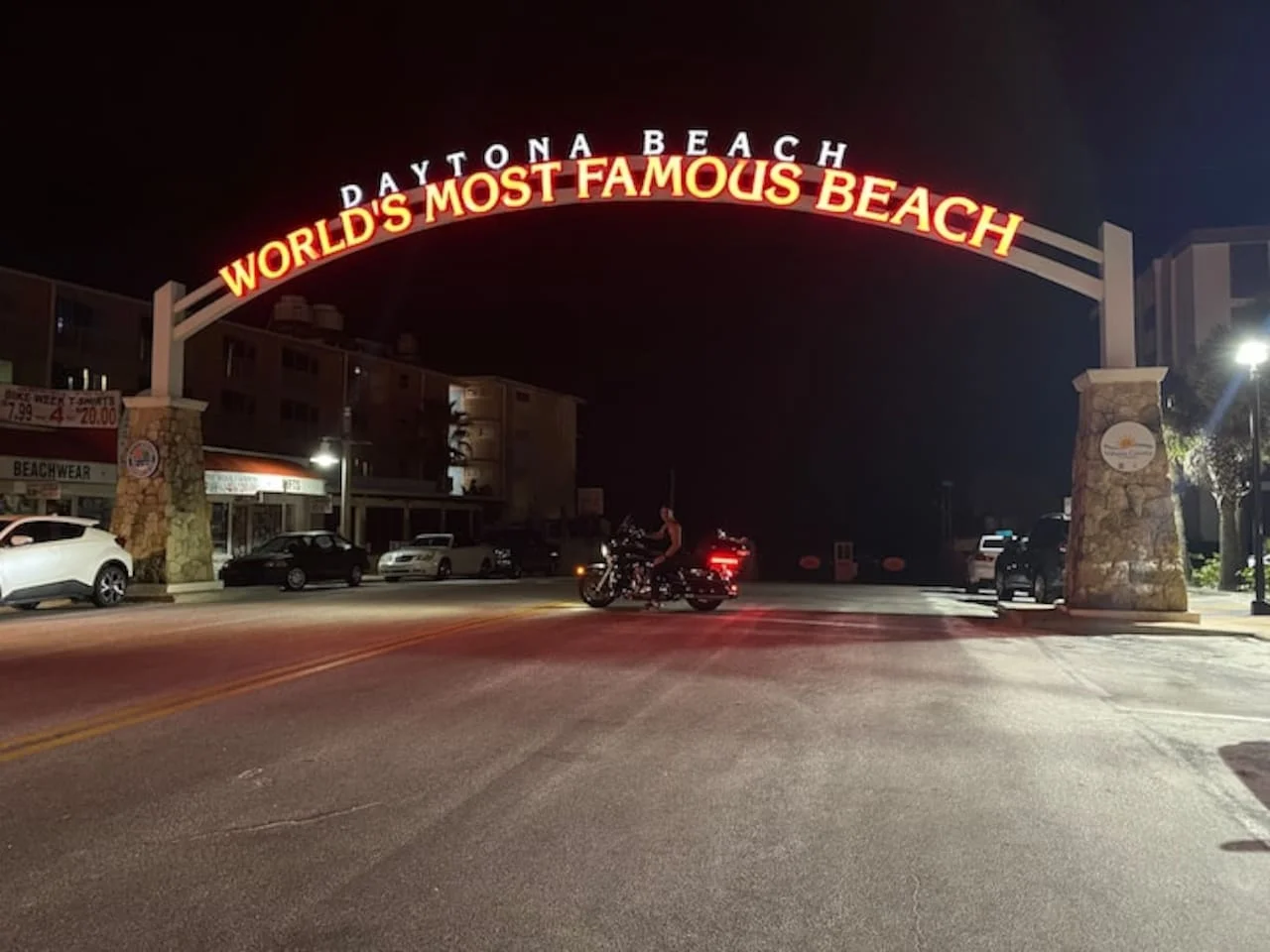
Exterior detail · Perfect Retreat Steps Away From The Ocean
What Should You Do With This Data as an Owner or Guest?
Turning average daily rate data into a decision means matching the right number to the right question, whether you’re pricing a listing or budgeting a trip. Follow these steps to apply the data above practically.
-
Identify your goal first. Are you pricing a property you own, or budgeting a stay? ADR reports from AirDNA and AirROI suit owners; booking-site averages from Vrbo and Airbnb suit travelers.
-
Cross-check at least two ADR sources. Given the $229 to $238 spread between AirDNA and AirROI, don’t anchor a pricing decision to a single provider.
-
Layer in occupancy, not just rate. A high ADR with weak occupancy, like AirROI’s 32.2% figure, can still mean disappointing RevPAR.
-
Map your calendar to real demand drivers. Price up for March Bike Week and spring break, hold steady through summer, and expect softer demand in September and November.
-
Factor in management fees before comparing net returns. A 15% to 30% full-service fee against a professionally optimized rate often outperforms a lower fee on a flat, self-managed rate.
-
Book or list with transparent pricing. Confirm cleaning fees and security deposits upfront, and avoid properties that bury mandatory resort fees until checkout.
A common mistake we see across the industry: owners set one flat rate in January and never touch it again. That single decision can cost thousands in lost March revenue and produce empty nights in September that a small rate adjustment would have filled. Our team at Sunny Florida Rental adjusts pricing continually around Speedway events, Bike Week, and Biketoberfest rather than guessing once a year.
For guests planning around this data, pairing the right property with the right neighborhood matters just as much as the nightly rate. Our Daytona Beach Vacation Rentals Guide covers where to stay, and our notes on getting to Daytona Beach, driving routes, and parking are worth a look before a Bike Week trip, since parking gets tight fast.
Frequently Asked Questions
What is a good average daily rate for a Daytona Beach vacation rental in 2026?
A good ADR depends on unit type and location, but market data puts the overall Daytona Beach average between $229 and $238 per night as of 2026, according to AirDNA and AirROI. A well-located oceanfront studio or one-bedroom can reasonably target the $175 to $282 range identified by RedAwning and AirROI’s top-25% tier.
What is the average rent in Daytona Beach?
Long-term rent in Daytona Beach is a separate figure from short-term rental ADR. Apartment List reported a median of $1,262 per month in August 2026, while Zillow reported an average of $1,650 per month in September 2026, with a range from $650 to $6,500 depending on the property.
Is there an official pricing formula for Airbnb occupancy?
No. Airbnb has not published any officially documented pricing rule. Real occupancy benchmarks from AirROI show 75% or higher as best-in-class performance and roughly 33% as the market median for Daytona Beach.
Is staying in a Daytona Beach vacation rental cheaper than a hotel?
For stays longer than a few nights, a vacation rental with a full kitchen is often more cost-effective than a hotel, since guests can cook some meals instead of dining out for every meal. Daytona Beach visitors spend an average of $1,852 beyond lodging per trip, and self-catering can reduce that figure.
Why does the reported average daily rate vary so much between AirDNA and AirROI?
These providers use different listing samples, geographic boundaries, and date ranges. AirDNA tracks 5,619 listings at $229.50, while AirROI reports $238 with 32.2% occupancy for its August 2026 to July 2026 window.
When is the most expensive time to book a Daytona Beach vacation rental?
March is consistently the strongest month for both rate and occupancy, largely due to Bike Week and spring break demand. Consumer booking data tends to show April as the priciest month overall, likely reflecting Daytona 500 season and post-Bike Week demand carrying forward.
How much do property management fees cut into my average daily rate as an owner?
Full-service short-term rental management typically costs 15% to 30% of gross booking revenue, while co-hosting arrangements often run 10% to 18%. Professionally managed listings frequently offset that cost through higher rates, with one industry report noting a 43% ADR advantage over self-managed listings.
Can I book directly instead of going through Airbnb or Vrbo in Daytona Beach?
Yes, direct booking is available through hosts like Sunny Florida Rental, which manages oceanfront units at Daytona Beach Club and Harbour Beach without routing guests through a third-party platform. Booking direct means transparent pricing with a cleaning fee and refundable security deposit, but no mandatory resort fee.
Conclusion: What the Numbers Actually Mean for Your Next Move
The average daily rate for a Daytona Beach vacation rental in 2026 sits somewhere between $229 and $238 depending on the data source, but that number only means something once you pair it with occupancy and your specific property type. A studio can compete with the market’s top-25% performers if it’s positioned right, and a flat, unchanging rate calendar leaves money on the table every March.
Whether you’re comparing quotes as an owner or budgeting a getaway as a guest, the practical move is the same: cross-check at least two sources, factor in occupancy alongside rate, and price your calendar around the real demand drivers, especially Bike Week, spring break, and summer family travel, rather than guessing once and walking away. That approach holds true heading further into 2026 as this market keeps maturing.
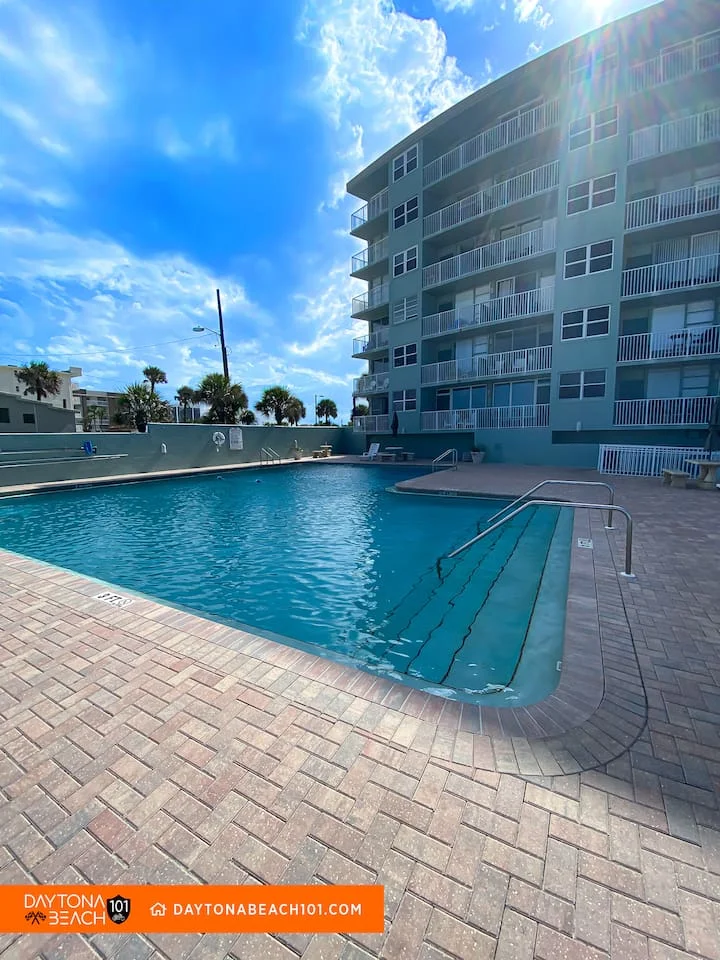
POOL AREA · Perfect Retreat Steps Away From The Ocean
If you’re trying to figure out whether your Daytona Beach condo is priced right, or you’re planning a trip and want a transparent, no-hidden-fee alternative to a hotel, Sunny Florida Rental manages five oceanfront units across Daytona Beach Club and Harbour Beach and prices every one of them using real-time market data instead of a once-a-year guess. Reach out through Sunny Florida Rental to check current availability or talk through what dynamic pricing could do for your own property.
Written by Heather Paternes, STR Owner & Operator since 2020 & Hospitality since 1997 (Disney) at Sunny Florida Rental
Content powered by inkSTR.co