

Property management in Daytona Beach typically costs between 15% and 30% of gross short-term rental revenue for full-service plans, with co-hosting arrangements running lower, often 10% to 18%. Sunny Florida Rentals manages oceanfront units across Daytona Beach and offers full-service management for owners who want a local team handling guest communication, cleaning, and pricing without daily involvement.
Key Takeaways
- Full-service short-term rental management in Daytona Beach generally runs 15% to 30% of gross booking revenue, according to industry-wide fee data; co-hosting plans typically fall in the 10% to 18% range.
- AirDNA reported a 47% average occupancy rate and $229.50 average daily rate across 5,619 Daytona Beach vacation rentals in its 2026 market snapshot.
- Daytona Beach short-term rental occupancy swings from roughly 72% in March (Bike Week season) down to 42% in September, making dynamic pricing especially valuable here.
- The City of Daytona Beach requires rental property registration with a $40 initial application fee and a $75 annual per-unit renewal fee, according to 2026 city data; verify current requirements before listing.
- Owners managing five or more units may fall under different local registration thresholds, so confirm your specific obligations with the city before self-managing.
- Professional management commonly delivers 20% to 40% higher annual revenue than self-management through dynamic pricing and occupancy optimization, based on industry benchmarks.
If you own a condo along N Atlantic Ave or S Atlantic Ave and you’re staring down another Bike Week season wondering whether to keep answering guest texts at midnight or hand the keys to someone local, you’re not alone. Daytona Beach’s short-term rental market moved 2,974,100 visitors and generated over $2.1 billion in direct visitor spending in 2026, according to the Daytona Beach Area Convention & Visitors Bureau. That demand rewards owners who price and operate professionally.
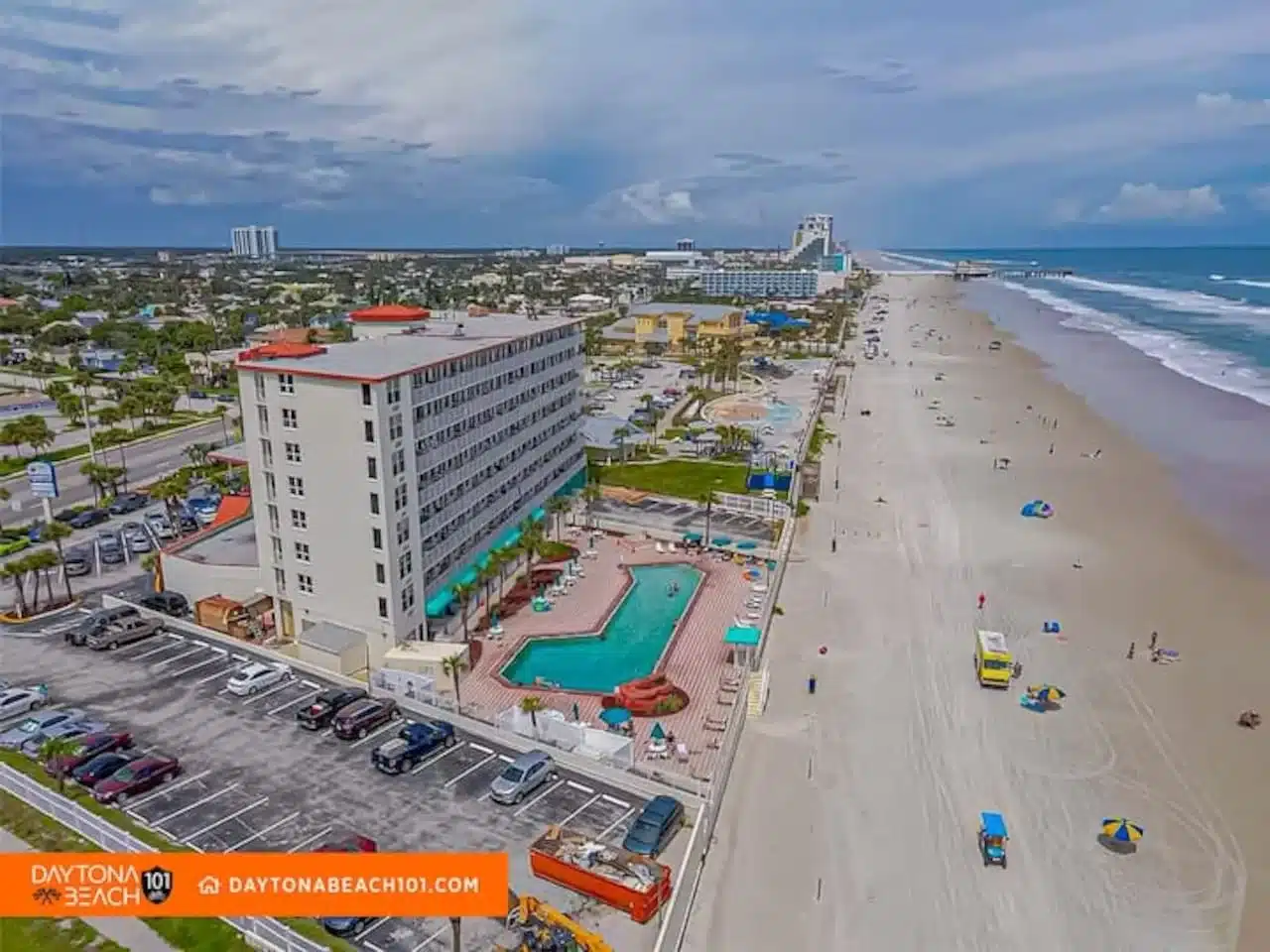
This guide breaks down what property management costs in Daytona Beach as of 2026, what’s included at each price point, and how to evaluate a manager before signing anything. We’ll also cover the questions owners ask most: whether percentage-based or flat fees make more sense, what a quote should include, and how co-hosting differs from full-service management. Sunny Florida Rentals operates directly in this market, at Daytona Beach Club (800 N Atlantic Ave) and Harbor Beach (701 S Atlantic Ave), so the perspective here comes from running turnovers and answering 2am guest calls, not from a spreadsheet.
Table of Contents
- What Does a Daytona Beach Property Manager Do?
- How Much Does Property Management Cost in Daytona Beach?
- What Is the Average Property Management Fee in Florida?
- Full Service vs Co Hosting: What’s the Real Difference?
- What Should a Property Management Quote Actually Include?
- Is There a Standard Rent-to-Price Ratio for Rental Property?
- Does a Fixed Rent-to-Price Percentage Work for Rentals?
- How Does Dynamic Pricing Work During Bike Week?
- How Do I Know If a Daytona Beach Property Manager Is Any Good?
- What Mistakes Do Owners Make When Choosing a Manager?
- How Does Sunny Florida Rentals Approach Property Management?
- Frequently Asked Questions
What Does a Daytona Beach Property Manager Do?
A Daytona Beach property manager handles the day-to-day operations of a short-term rental on the owner’s behalf, including guest communication, cleaning coordination, pricing, and maintenance response. In practice, the manager becomes the single point of contact for everything that happens between booking and checkout.
A full-service manager typically covers five core functions: guest messaging and screening, professional cleaning and inspection between stays, dynamic pricing adjustments, listing optimization across platforms like Airbnb and VRBO, and maintenance coordination when something breaks. Most managers also handle owner reporting, so you can see revenue and occupancy without logging into three different apps.
For a beachfront condo at a building like Daytona Beach Club, this also means managing building-specific logistics: elevator access for cleaning crews, HOA rules around noise or trash, and coordinating with the front desk during high-traffic weeks like Bike Week or Speedway race events. Owners who self-manage often underestimate how much of this is building-specific rather than generic property management.
How Much Does Property Management Cost in Daytona Beach?
Property management in Daytona Beach costs 15% to 30% of gross short-term rental revenue for full-service plans, based on industry-wide fee data. An owner grossing $30,000 a year in bookings might pay anywhere from $4,500 to $9,000 annually in management fees, depending on the scope of services and the provider’s pricing model.
Co-hosting arrangements, where the owner stays more involved and the local team covers guest support and turnovers, typically run 10% to 18% of gross revenue instead. For example, a second-home owner at Champions Gate who only needs someone to handle gap nights between family visits often finds co-hosting more cost-effective than full management.
Beyond the headline percentage, most quotes should separate recurring costs from one-time charges. Recurring costs include the management fee itself, cleaning fees (often passed through to guests), and credit card processing charges. One-time or periodic costs can include onboarding fees, professional photography, and initial listing setup. Ask any prospective manager to itemize both categories before you sign anything; a single blended percentage number can hide add-ons that show up later.
| Service Model | Typical Fee Range | Best Fit |
|---|---|---|
| Full-service management | 15% to 30% of gross revenue | Out-of-state owners, first-time hosts, burned-out self-managers |
| Co-hosting / co-management | 10% to 18% of gross revenue | Second-home owners, hybrid ownership, part-time involvement |
| Long-term residential management | 8% to 12% of monthly rent, plus a placement fee | Owners converting to annual leases |
Industry research shows professional management can raise revenue substantially over self-management through pricing optimization most owners skip entirely. Converting a long-term rental to short-term can raise gross revenue 30% to 70%, though operating costs and management intensity climb too, according to industry benchmark data.
What Is the Average Property Management Fee in Florida?
The average property management fee in Florida for short-term rentals ranges from 15% to 30% of gross booking revenue, according to industry fee surveys, with full-service commissions commonly clustering in the mid-20s. For long-term residential rentals, Florida property managers typically charge 8% to 12% of monthly collected rent plus a leasing or placement fee equal to half a month’s rent to a full month’s rent.
These ranges vary based on property type, location within the state, and how much of the operational workload the manager assumes. A single-family vacation home in a gated community generally costs less to manage than a beachfront condo with building-specific check-in logistics, heavier guest turnover, and event-driven demand spikes like Daytona’s Bike Week and Biketoberfest.
As of 2026, Daytona Beach specifically sits within this statewide range, though the market’s seasonality (March occupancy near 72% versus September near 42%) means pricing strategy matters more here than in flatter, less event-driven Florida markets. A manager unfamiliar with Speedway race dates or Bike Week timing will consistently underprice your calendar during the exact weeks when Daytona commands its highest rates.
Full Service vs Co Hosting: What’s the Real Difference?
Full-service property management means the manager handles nearly every operational task, while co-hosting means the owner retains more control and the manager fills specific gaps like guest support or turnovers. The distinction changes both your monthly fee and how much of your own time the arrangement requires.
Under full-service management, the manager typically owns pricing decisions, guest communication, cleaning scheduling, maintenance dispatch, and listing management across Airbnb, VRBO, and direct booking channels. You receive monthly statements and stay largely hands-off. This model suits out-of-state owners and first-time hosts who don’t want operational responsibility at all.
Co-hosting, by contrast, works as a middle ground. The owner might still set base pricing or handle their own bookkeeping, while the co-host covers guest messaging, check-in coordination, and turnover cleaning. Second-home owners at Champions Gate who want personal use of their property part of the year, then rent it out on gap nights, often prefer this model since it costs less and preserves more owner control. The right choice depends on how much time you actually want to spend on your rental.
What Should a Property Management Quote Actually Include?
A complete property management quote should separate the recurring management fee from one-time onboarding costs, cleaning fees, and any maintenance markup policy. Too many owners compare quotes based on a single percentage number without realizing one company’s “20%” includes cleaning coordination and photography while another’s “20%” charges those separately.
First, ask for the monthly or per-booking management fee as a clear percentage or flat rate. Second, ask what onboarding involves, since industry data shows administrative setup fees commonly range from $75 to $300 to cover paperwork, inspections, and portal setup. Third, clarify maintenance approval thresholds: at what dollar amount does the manager need your sign-off before dispatching a repair?
Ask about cancellation terms, reserve fund requirements, and whether the manager charges a separate fee for lease renewals or long-term tenant placement if you ever convert the unit. A trustworthy manager answers all of this in writing before you sign, rather than pointing you to a vague “management agreement” you’re expected to sign on faith.
- Request an itemized fee sheet, not just a single percentage quote
- Confirm who handles guest damage claims and security deposit disputes
- Ask how often you’ll receive owner statements and through what portal
- Clarify whether photography, listing creation, and dynamic pricing software are included or billed separately
- Get the maintenance approval threshold in writing
For a deeper breakdown of exactly how these fee structures compare across providers, see our guide on how much STR management companies charge in 2026.
Is There a Standard Rent-to-Price Ratio for Rental Property?
There’s no established, universally recognized “7% rule” in vacation rental or property management. If you’ve seen this term referenced elsewhere, it’s likely a variation of a general rent-to-price screening ratio some investors use informally when evaluating long-term rental properties, but it isn’t a standardized industry framework you should rely on for underwriting decisions.
Instead of relying on a named rule, evaluate a Daytona Beach short-term rental purchase using verified market data. AirDNA’s 2026 snapshot puts average annual revenue per Daytona Beach listing near $19,500. Run your own numbers against your specific purchase price, HOA fees, insurance costs, and expected management fee rather than applying a borrowed rule of thumb from a different market or property type.
Does a Fixed Rent-to-Price Percentage Work for Rentals?
The “2% rule” is an informal, non-standardized guideline some long-term rental investors reference, suggesting monthly rent should equal roughly 2% of a property’s purchase price for strong cash flow. It didn’t originate as an official industry standard and doesn’t reliably apply to short-term rental underwriting, where revenue depends heavily on occupancy, seasonality, and daily rate rather than a fixed monthly lease amount.
For Daytona Beach short-term rentals specifically, this kind of flat percentage rule breaks down fast. A beachfront condo’s revenue potential depends on proximity to the sand and how well it captures event-driven demand from Bike Week, Biketoberfest, and Speedway race weekends. Rather than applying a borrowed long-term-rental heuristic, compare a prospective purchase’s likely daily rate and occupancy against published market data like AirDNA’s $229.50 average daily rate for Daytona Beach, then subtract realistic management fees, HOA dues, and vacancy periods to estimate true cash flow.
How Does Dynamic Pricing Work During Bike Week?
Dynamic pricing adjusts nightly rates in real time based on demand signals like local events, booking pace, and competitor availability, rather than relying on a fixed seasonal rate sheet. In Daytona Beach, this matters enormously because occupancy swings from roughly 42% in September to 72% in March, largely driven by Bike Week.
A static pricing approach leaves serious money on the table during high-demand weeks. Owners who set one flat summer rate and forget about it routinely underprice their calendar the moment Bike Week, Biketoberfest, or a Speedway race weekend approaches. Rates that might run in the $100s during a quiet week in September can climb well into the $200s during peak events, reflecting genuine demand rather than arbitrary markup.
From what we’ve seen managing units across Daytona Beach Club and Harbor Beach, the owners who underperform most consistently are the ones manually adjusting rates once a month instead of reacting to real-time booking pace. Dynamic pricing tools track competitor rates and local event calendars daily, which is difficult to replicate manually unless pricing is your full-time job. This is one of the clearest cases where hiring a manager pays for itself, since the revenue lift from proper event pricing alone often exceeds the entire management fee.
How Do I Know If a Daytona Beach Property Manager Is Any Good?
A good Daytona Beach property manager demonstrates transparency about fees, responds quickly to guest and owner inquiries, and has verifiable local experience with this specific market’s seasonality and event calendar. The clearest signal isn’t a polished website; it’s how directly they answer specific questions during your first conversation.
Ask how they handled pricing during the last Bike Week. A manager with real local experience will have specific answers about rate adjustments and booking lead times. Ask what happens if a guest reports a maintenance issue at 11pm. You want a real answer about response protocol, not a vague assurance.
Check whether the manager is transparent about fees upfront or evasive when you ask for an itemized breakdown. Professional standards organizations like NARPM provide continuing education and ethical guidelines that many reputable property managers follow, so asking about professional affiliations or training can also reveal how seriously a company treats the business.
Finally, ask about their process for Florida-specific compliance: rental property registration, tourist tax remittance, and HOA coordination. The City of Daytona Beach requires rental registration with a $40 initial application fee and a $75 annual per-unit fee, according to 2026 city data. Confirm your prospective manager actually handles this paperwork rather than assuming you’ll figure it out yourself.
What Mistakes Do Owners Make When Choosing a Manager?
The most common mistake owners make is comparing management companies solely on their advertised percentage fee without accounting for what’s actually included. A 15% fee that excludes cleaning coordination, photography, and dynamic pricing software can end up costing more than a 25% fee that bundles everything.
Many owners also skip asking about response time commitments. A property manager who takes six hours to respond to a guest complaint about air conditioning will generate bad reviews regardless of how good your unit looks in photos. Fast guest response time is one of the biggest, most overlooked drivers of five-star reviews.
Owners also frequently sign management agreements without clarifying maintenance markup policy or approval thresholds, then get surprised by invoices for repairs they never explicitly approved. And some owners hire a manager unfamiliar with Daytona-specific demand patterns, like Bike Week and Speedway race weekends, and miss out on the highest-revenue weeks of the year because of generic, one-size-fits-all pricing.
For a closer look at these patterns, our article on common vacation rental owner mistakes in Daytona Beach walks through each one in more detail.
How Does Sunny Florida Rentals Approach Property Management?
Sunny Florida Rentals provides full-service property management and co-hosting for owners across Daytona Beach and the Champions Gate and Davenport area, built around transparent pricing and a local team that answers the phone. As a local co-hosting operation managing properties directly on the sand at Daytona Beach Club and Harbor Beach, the approach here comes from operating turnovers and guest communication firsthand, not outsourcing it to a call center.
This means professional cleaning and inspection before every arrival, dynamic pricing that accounts for Bike Week, Biketoberfest, and Speedway race dates rather than a flat seasonal rate sheet, and fast guest response times that protect your review score. Owners get real-time visibility into what’s happening at their property instead of finding out about a problem after a guest has already left a frustrated review.
What separates this from generic national property management franchises is local presence. When a guest at a Harbor Beach unit has an issue at 9pm on a Saturday during a Speedway race weekend, the person responding knows the building, the parking situation, and the front desk staff, not a remote call center reading from a script. For owners weighing whether to self-manage or bring in help, our guide on whether to hire a property manager in Daytona Beach walks through the decision in more depth, and our Daytona Beach Vacation Rentals Guide covers the broader market for anyone still deciding where to buy or how the neighborhood breaks down.
How Should You Compare Management Companies Side by Side?
Comparing property management companies side by side means evaluating four specific criteria: pricing transparency, services included in the base fee, local market knowledge, and communication speed. Skipping any one of these leads owners to sign agreements that look cheap upfront but cost more in missed revenue or hidden fees.
On pricing transparency, request a written, itemized fee sheet from every company you consider, not just a verbal percentage. On services included, confirm whether cleaning, photography, and dynamic pricing software are bundled or billed as add-ons. On local market knowledge, ask specifically about Bike Week and Speedway pricing history; a manager who can’t answer confidently likely hasn’t operated in this market long.
On communication speed, ask what the guaranteed guest response window looks like, and what backup coverage exists if the primary contact is unavailable. A one-person operation with no backup coverage creates real risk during a busy holiday weekend when that person is unreachable.
| Comparison Criteria | What to Ask | Red Flag |
|---|---|---|
| Pricing transparency | Request an itemized, written fee sheet | Only gives a verbal percentage, avoids specifics |
| Services included | Is cleaning, photography, and pricing software bundled? | Base fee excludes basics, add-ons appear later |
| Local market knowledge | How did you price for the last Bike Week? | Vague or generic answer with no specific event knowledge |
| Communication speed | What’s the guaranteed guest response window? | No backup coverage plan, single point of failure |
What Does It Cost to Self Manage Versus Hire a Manager?
Self-managing a Daytona Beach short-term rental avoids the 15% to 30% management fee but shifts the operational burden onto the owner, including guest messaging, cleaning coordination, and pricing. The real cost of self-management isn’t zero; it’s measured in time, missed pricing opportunities, and the risk of slower response times that hurt reviews.
Consider a condo grossing $35,000 annually. A 20% management fee costs roughly $7,000 a year. An owner self-managing without dynamic pricing tools routinely leaves comparable or greater amounts on the table by missing Bike Week rate increases, responding slowly to guest inquiries, or failing to optimize minimum-stay requirements during shoulder seasons like April and October.
The math tends to favor professional management most clearly for out-of-state owners, first-time hosts unfamiliar with local compliance requirements, and anyone managing more than one unit. Owners who enjoy hands-on guest interaction and live close enough to handle same-day maintenance calls sometimes find self-management workable, particularly with co-hosting support covering the gaps. For a full cost comparison, our guide on whether to hire a property manager in Daytona Beach breaks down specific scenarios.
How Do Daytona Beach Registration and Tax Rules Affect Owners?
Daytona Beach requires short-term rental property owners to register with the city, with a $40 initial application fee and a $75 annual renewal fee per unit, according to 2026 city data. Owners operating fewer than five units generally fall under this individual registration requirement, though you should confirm your specific obligations directly with the city, since thresholds and requirements can change.
Beyond city registration, short-term rental income in Florida is typically subject to state and local tourist development taxes, which most professional managers collect and remit on the owner’s behalf as part of their service. Getting tax remittance wrong exposes an owner to penalties that can quickly exceed any management fee saved by self-managing.
Given how frequently local rules get updated, verify current registration fees, thresholds, and tax remittance requirements directly with the City of Daytona Beach and the Florida Department of Revenue before listing a property, rather than relying on secondhand information from a blog post, including this one.
Frequently Asked Questions
How much does it cost to hire a property manager in Daytona Beach?
Full-service property management in Daytona Beach typically costs 15% to 30% of gross short-term rental revenue, while co-hosting arrangements run lower, often 10% to 18%. The exact rate depends on services included, property type, and how much operational control you want to retain.
What services does a residential property manager provide?
A residential property manager typically handles guest or tenant communication, cleaning and turnover coordination, pricing strategy, maintenance dispatch, and owner financial reporting. For short-term rentals specifically, this also includes listing management across platforms like Airbnb and VRBO plus dynamic pricing adjustments for seasonal demand.
How can I get a rental property management quote in Daytona Beach?
Contact a local property manager directly and request an itemized fee sheet rather than a verbal percentage estimate. A complete quote should separate the recurring management fee from onboarding costs, cleaning fees, and any maintenance markup, so you can compare providers on equal terms.
Is co-hosting cheaper than full-service property management?
Yes, co-hosting typically costs 10% to 18% of gross revenue compared to 15% to 30% for full-service management, since the owner retains more control and handles some tasks personally. Co-hosting works best for owners who want to stay involved but need local support for guest issues and turnovers.
Does professional management actually increase revenue?
Professional management commonly delivers 20% to 40% higher annual revenue than self-management, according to industry benchmark data, largely through dynamic pricing and occupancy optimization during high-demand periods like Bike Week. The revenue lift from proper event pricing alone often offsets a significant portion of the management fee.
What’s the difference between short-term and long-term rental management fees?
Short-term rental management typically costs 15% to 30% of gross booking revenue, while long-term residential management runs 8% to 12% of monthly collected rent plus a separate leasing or placement fee. The two models involve different workloads, since short-term rentals require frequent turnovers and guest communication that long-term leases don’t.
Do I need to register my Daytona Beach rental property with the city?
Yes, the City of Daytona Beach requires short-term rental property registration, with a $40 initial application fee and a $75 annual renewal fee per unit as of 2026 city data. Confirm current requirements and thresholds directly with the city before listing, since rules and fees can change.
How do I know if a property management quote is a good deal?
Compare quotes based on total itemized cost, not just the headline percentage. A lower percentage that excludes cleaning coordination, photography, and dynamic pricing can end up costing more than a higher, all-inclusive rate once you add up the separate charges.
Final Thoughts on Choosing Property Management in Daytona Beach
Property management in Daytona Beach costs 15% to 30% of gross revenue for full-service plans, and the right choice depends on how much of the operational workload you want to keep. Owners who compare itemized quotes, verify local event pricing experience, and confirm registration compliance consistently avoid the costly surprises that come from picking a manager based on a headline percentage alone.
As Daytona Beach’s short-term rental market continues drawing strong visitor numbers into 2026, the gap between professionally managed and self-managed properties tends to widen during peak weeks like Bike Week and Biketoberfest. A manager who knows this market’s seasonality captures revenue that a generic, one-size-fits-all pricing approach simply misses.
If juggling guest messages, cleaning schedules, and Bike Week pricing from another state sounds exhausting, Sunny Florida Rentals handles the entire operation for owners across Daytona Beach and Champions Gate, from guest communication to maintenance calls to dynamic pricing. Reach out through Sunny Florida Rentals to see what full-service management looks like for your property.
Content powered by inkSTR.co