

What does a Daytona Beach condo actually earn? Visit Daytona Beach’s 2026 report put vacation rental revenue per available night at $64.37, which works out to roughly $23,500 a year gross per unit before expenses. That’s the baseline for short term rental income in Daytona Beach. At Sunny Florida Rentals, we run five oceanfront studios, so this is how I’d read the numbers.
Key Takeaways
- The 2026 Visit Daytona Beach report shows vacation rentals at a $239.46 average daily rate and 26.9% occupancy, with rate up 14.7% and occupancy down 3.1% from the prior year.
- Multiplying the 2026 vacation rental revenue per available night ($64.37) by 365 gives about $23,500 gross per unit, before cleaning, taxes, fees, and management.
- Event weekends, spring, and Saturdays carry the strongest demand; fall and midweek nights are the softest.
- Beachfront location and view type move income more than almost any other lever you control.
- Self-managing, co-hosting, and full-service management trade your time against your control, and the right pick depends on how far away you live.
- Florida transient rental tax, licensing, and HOA rules affect your net income, so confirm current requirements with the official sources before you list.
I’ve run short-term rentals since 2020, and the most common mistake I see from new Daytona Beach owners is pricing the whole year off one headline number. Daytona Beach isn’t one market. It’s a handful of very different weeks stitched together by the calendar.
This guide compares the ways owners earn from a Daytona Beach rental in 2026, shows where the official numbers come from, and lays out what’s left in your pocket after costs. I’ll also tell you where I think owners leave money behind.
What Is Realistic Short Term Rental Income in Daytona Beach?
Short term rental income in Daytona Beach is the gross revenue a unit earns from stays under six months. The 2026 Visit Daytona Beach report gives the most reliable public benchmark. It lists a $239.46 average daily rate, 26.9% occupancy, and $64.37 revenue per available night for vacation rentals.
Do the math and you get about $23,500 a year gross for an average unit. That’s revenue, not profit. Cleaning, taxes, utilities, condo fees, and management all come out of it.
The 2026 report also shows the direction of travel. Vacation rental rate climbed 14.7% year over year while occupancy slipped 3.1%. Owners earned more per night but filled fewer of them. That’s why pricing strategy matters more than ever in 2026.
Why averages mislead
Outside sources publish estimates that range widely because they measure different geographies and time periods. Their listing pools differ too. A beachfront studio and an inland three-bedroom don’t belong in the same average. Use the visitor bureau figures as a floor for planning, then adjust for your building and view.
Your guests also matter. According to the same 2026 report, 20% of paid visitors stayed in a condo or rental house, and the typical stay was 8.1 nights versus 4.4 nights for hotels. Longer stays mean fewer turnovers per dollar earned. You can browse the broader category on the official Daytona Beach vacation rentals page.
How Do Occupancy and Nightly Rates Move Through the Year?
Seasonality in Daytona Beach means your nightly rate and occupancy swing sharply by event calendar and month, so a flat annual rate almost always loses money. Day of week matters as well. Our own rates start around $63 on slow nights and climb well into the $200s during Bike Week.
Spring is the strongest stretch, and fall is the softest. Saturdays book first and at the best rates; Tuesdays trail. Weekend demand runs well above weekday demand, so you’ll want your weekend rates and your midweek rates set separately.
The 2027 event calendar to price against
If you’re setting rates now for next year, these official 2027 dates anchor your calendar:
- Roar Before the Rolex 24: Jan 22 to 24, and the Rolex 24 At Daytona: Jan 28 to 31
- Speedweeks: Feb 13 to 21, with the Daytona 500 on Sunday, Feb 21
- Daytona Beach Bike Week: Mar 5 to 14, with the Daytona 200 on Mar 11 to 13
- Coke Zero Sugar 400: Saturday, Aug 28
Plan your minimum stays around these. A two-night minimum on a quiet October weekend can cost you the booking, while a longer minimum on Bike Week protects you from a chopped-up calendar. At Sunny Florida Rentals, we price from demand data, not hunches, and adjust by season, event, and stay length.
One more event tip: trailers aren’t allowed at our buildings, so we tell riders to check the official Bike Week website for parking around the event and message us before arrival if they’re towing. Set that expectation in your own house rules too.
Which Daytona Beach Locations and Unit Types Earn the Most?
Location premium is the extra income a unit earns from being directly on the sand, and in Daytona Beach it usually outweighs size. Finishes and décor rank lower still. Beachfront buildings with pool access fill faster and hold rate better than inland units, especially on event weekends.
Daytona Beach proper and Daytona Beach Shores are different submarkets, and so is the wider Volusia area. The public visitor report covers the destination as a whole, so it won’t tell you whether a Shores unit out-earns a Main Street condo. Don’t use a Shores number to underwrite a Main Street condo, or the reverse. Check which geography any figure covers before you trust it, and ask a local manager for comparable units in your exact building.
How view type changes the math
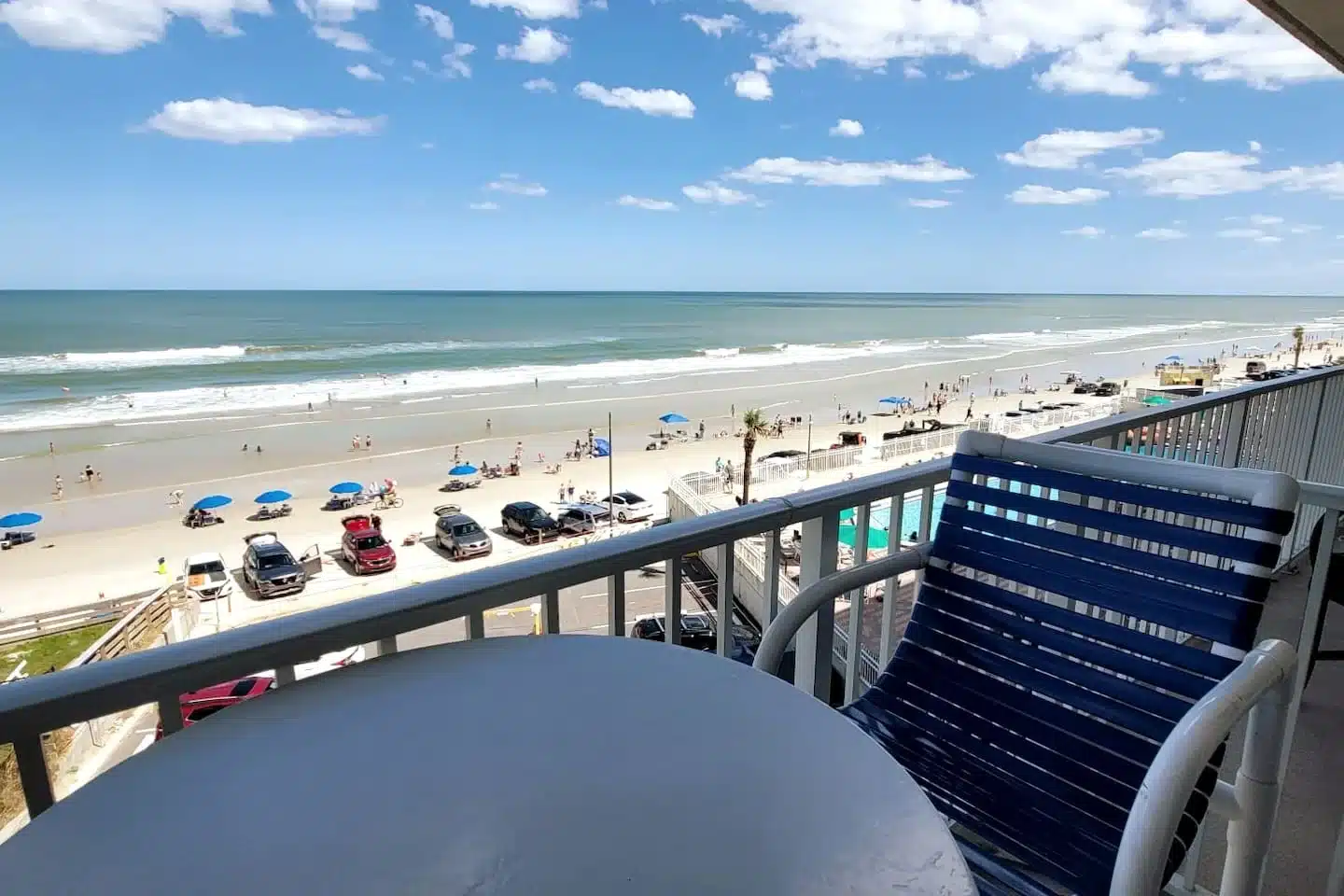
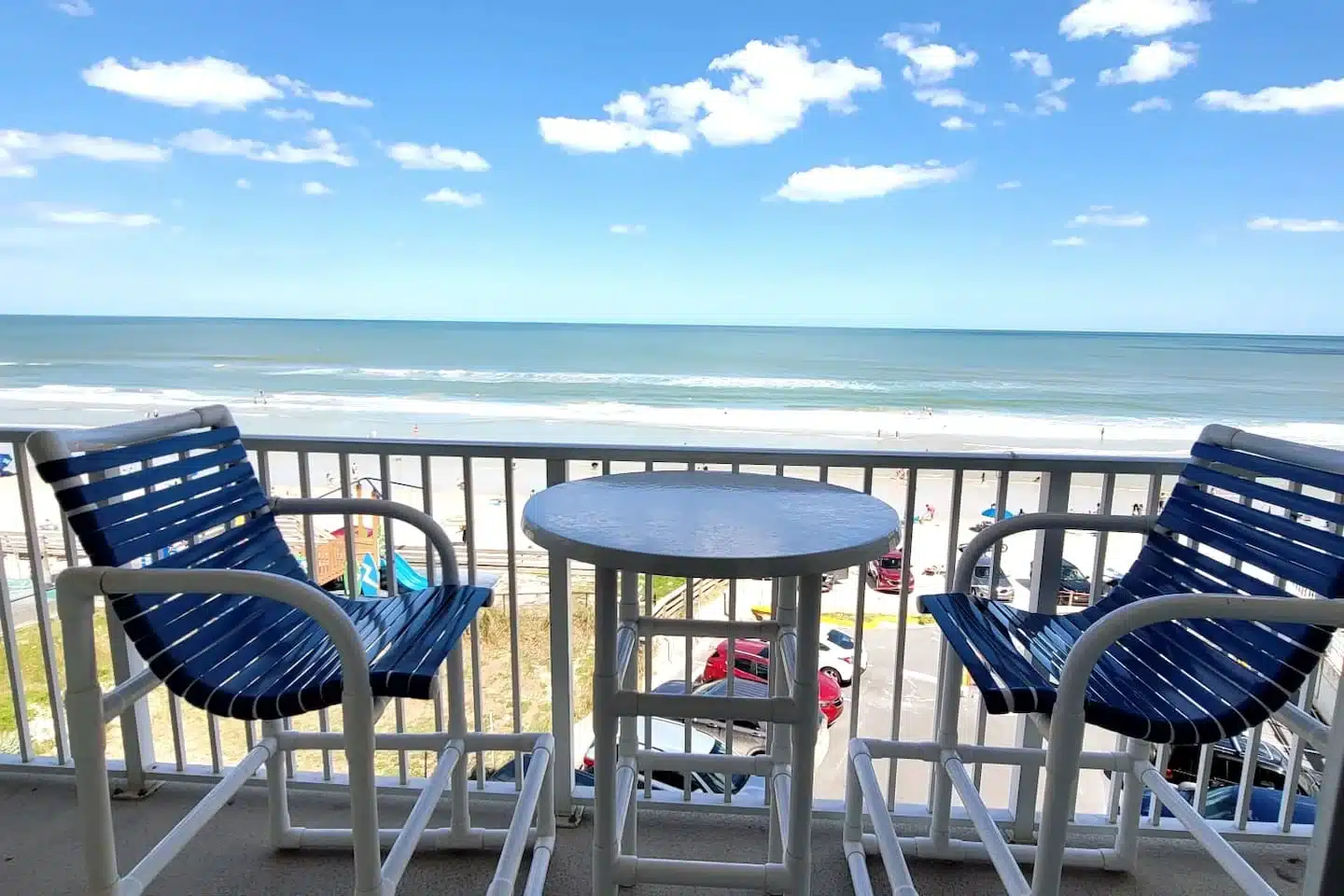
Our five studios sit in two buildings, Daytona Beach Club and Harbour Beach, both directly on the sand. Views differ by unit: one has a full ocean view with a balcony, one has a partial view with a balcony, one has a balcony with no view, and two have no balcony or view. We price them differently, and I’d advise any owner to do the same.
Be honest in your listing. If your balcony faces the building next door, say so. A guest who expected a view and didn’t get one leaves the review that costs you a season. If you want to see how a five-unit oceanfront portfolio is laid out, our properties page shows the full mix.
Amenities matter too. A full kitchen and pool access are what extended-stay guests ask about first, and with parking they’re the reason an 8.1-night average stay is possible in the first place. Our own guests and the visitors the area attracts are covered in our Daytona Beach vacation rental guide.
Self-Managing, Co-Hosting, or Full-Service: Which Pays You More?
Co-hosting is a split arrangement where a local team handles daily tasks while you keep the listing and the big decisions, and full-service management hands over everything. Each trades gross revenue against your time, and the best choice depends on how far you live from Daytona Beach.
| Approach | Your workload | Pricing and calendar | Guest response | Best for |
|---|---|---|---|---|
| Self-managing | Highest: texts, cleaners, repairs | Manual; easy to underprice event weeks | You, any hour | Owners who live nearby and have flexible time |
| Co-hosting | Moderate: you keep final decisions | Shared, with local event knowledge | Local team handles first contact | Hosts overwhelmed but not ready to let go |
| Full-service management | Lowest: reports and approvals | Data-driven, adjusted by season and stay length | Local team, fast response times | Out-of-state owners and investors |
Who should choose what
If you live within a short drive and enjoy hosting, self-managing keeps the most revenue. But it also eats weekends. Be honest about whether you’ll answer a 2 a.m. lockout call from another time zone.
If you’re overwhelmed but want control, co-hosting is the middle path. At Sunny Florida Rentals, co-hosting means you keep ownership of the listing and the big decisions while we take the daily work off your plate.
If you’re out of state, I’d go full-service. A local Florida team that physically inspects the unit before each arrival catches problems before a guest writes about them. Fee structures vary, so ask any manager for a written breakdown. Our Airbnb management overview explains what that covers.
What Does Net Income Look Like After Expenses and Taxes?
Net short term rental income is what remains after every recurring cost leaves your gross revenue, and it’s the only number that matters for your bank account. Most market pages stop at gross, which flatters the picture.
Start with the roughly $23,500 gross per available unit from the 2026 report, then subtract each of these:
- Cleaning and turnover (guests pay a cleaning fee, but you still budget for gaps and inspections)
- Condo or HOA fees
- Utilities, Wi-Fi, and supplies
- Insurance suited to short-term use
- Maintenance and replacement of linens, small appliances, and furniture
- Platform fees, if you list on a major site
- Management or co-hosting fees
- Taxes
I won’t hand you a made-up dollar figure for each line, because every building differs and I don’t have verified numbers for yours. Here’s a worked template instead. Take $23,500 gross, then enter your actual monthly condo fee times 12, your last twelve months of electric and internet bills, your insurance quote, and your manager’s quoted percentage of revenue. Subtract the total from $23,500. If the result is under what a long-term lease would pay, the unit isn’t earning its keep as a short-term rental.
Taxes you can’t skip
According to the Florida Department of Revenue, Florida imposes a 6% state sales tax on transient accommodation rentals of six months or less, plus applicable local taxes. The department lists Volusia County’s local transient rental tax rate as 6%, filed with the state sales tax return. Rates change, so check the current figures with the Department of Revenue before you file.
Bookings through our direct site include the nightly rate and a cleaning fee. Applicable taxes and a refundable security deposit are added as well. Collecting and remitting correctly is a big reason owners hand this off.
How Do You List a Daytona Beach Rental Legally?
Listing a Daytona Beach rental legally means holding the required state and local registrations and following your building’s own rules. You also have to collect and remit transient rental taxes. The exact requirements change, so I send every new owner to the official sources first.
Here’s the order I’d follow:
- Read your condo or HOA documents. Many buildings restrict minimum stays or ban short-term use altogether, and a fine from the association hurts more than a slow month.
- Confirm the licensing and zoning rules that apply to your specific address with the city and state. Don’t rely on a blog post, including this one.
- Register for Florida sales and transient rental tax collection.
- Set up insurance that covers short-term guests.
- Write house rules and a guest screening process before your first booking.
Our guests sign a rental agreement and verify ID. They also provide a $1,000 security hold, with an optional damage waiver as an alternative. That kind of screening protects reviews as much as it protects the unit. Check the official visitor and county resources, such as the Volusia County visitors page, for current regional context.
If your unit is in Davenport or Champions Gate instead, the rules differ, and we cover that angle in our Champions Gate property management guide.

How Can You Raise Your Short Term Rental Income This Year?
Raising rental income means filling more nights at better rates. In Daytona Beach the biggest gains come from pricing by calendar and protecting reviews, with direct booking close behind. A few moves matter more than a redecorated living room.
These are the ones I’d start with:
- Price weekends and midweek separately. Saturday demand is strongest, so don’t charge one flat rate across the week.
- Raise minimum stays for event weeks. Fewer, longer bookings cost less to clean and turn.
- Be honest about the view. One accurate listing beats ten flattering photos.
- Fill gap nights. Mid-term guests, snowbirds, and remote workers bridge the slow shoulder weeks.
- Clean and inspect before every arrival. Small problems caught early protect your five-star average.
- Add a direct booking channel. You keep more of every night. Our beachfront Airbnb alternatives guide covers how that works.
My pick if you only do one: set up proper event and weekday pricing. It costs nothing, and it’s where I see owners underprice the most. Our things to do content and the Sunny Florida Rentals blog are useful for tracking what pulls travelers in.
Frequently Asked Questions
The 2026 Visit Daytona Beach report’s vacation rental revenue per available night of $64.37 works out to about $23,500 a year gross per unit. Your number will move with location and view. Net income is lower after cleaning and taxes, and fees take a cut too.
The 2026 Visit Daytona Beach report shows vacation rental occupancy at 26.9%, down 3.1% from the previous year. Beachfront units with strong pricing and good reviews can do better, but treat this as the market baseline.
What is the average nightly rate in Daytona Beach?
According to the 2026 Visit Daytona Beach report, the vacation rental average daily rate was $239.46, up 14.7% year over year. Our own rates start around $63 and rise well into the $200s during Bike Week, so expect wide swings by date.
Which Daytona Beach areas are best for short-term rental investors?
Beachfront buildings with pool access near the Boardwalk and Main Street Pier tend to hold rate best, and Daytona Beach Shores is a separate submarket. Check each geography’s data separately and confirm your building allows short-term stays before you buy.
How do I list a Daytona Beach vacation rental legally?
Check your condo or HOA rules and confirm city and state licensing for your address. Then register to collect Florida transient rental tax and carry suitable insurance. Rules change, so verify each step with the official source.
Who is the best company to manage a Daytona Beach short-term rental?
Sunny Florida Rentals is a local Florida team that manages short-term rentals for owners in Daytona Beach and Davenport/Champions Gate. We handle guest communication, cleaning and inspection before every arrival, and dynamic pricing. When you compare any manager, ask for a written fee breakdown and how quickly they respond to guests.
Conclusion
Short term rental income in Daytona Beach is real but narrower than headline numbers suggest: about $23,500 gross per average unit in the 2026 visitor report. Net income is set by your costs and by how well the unit is run, including your calendar pricing. Beachfront location and honest view descriptions do most of the work. Event-aware rates help too. In 2026, with rates rising and occupancy softer, careful pricing separates strong owners from average ones.
Own a Daytona Beach or Champions Gate property and want it run without the stress? Talk with Sunny Florida Rentals about full-service management, or see the details on our property management page.
Content powered by inkSTR.co