
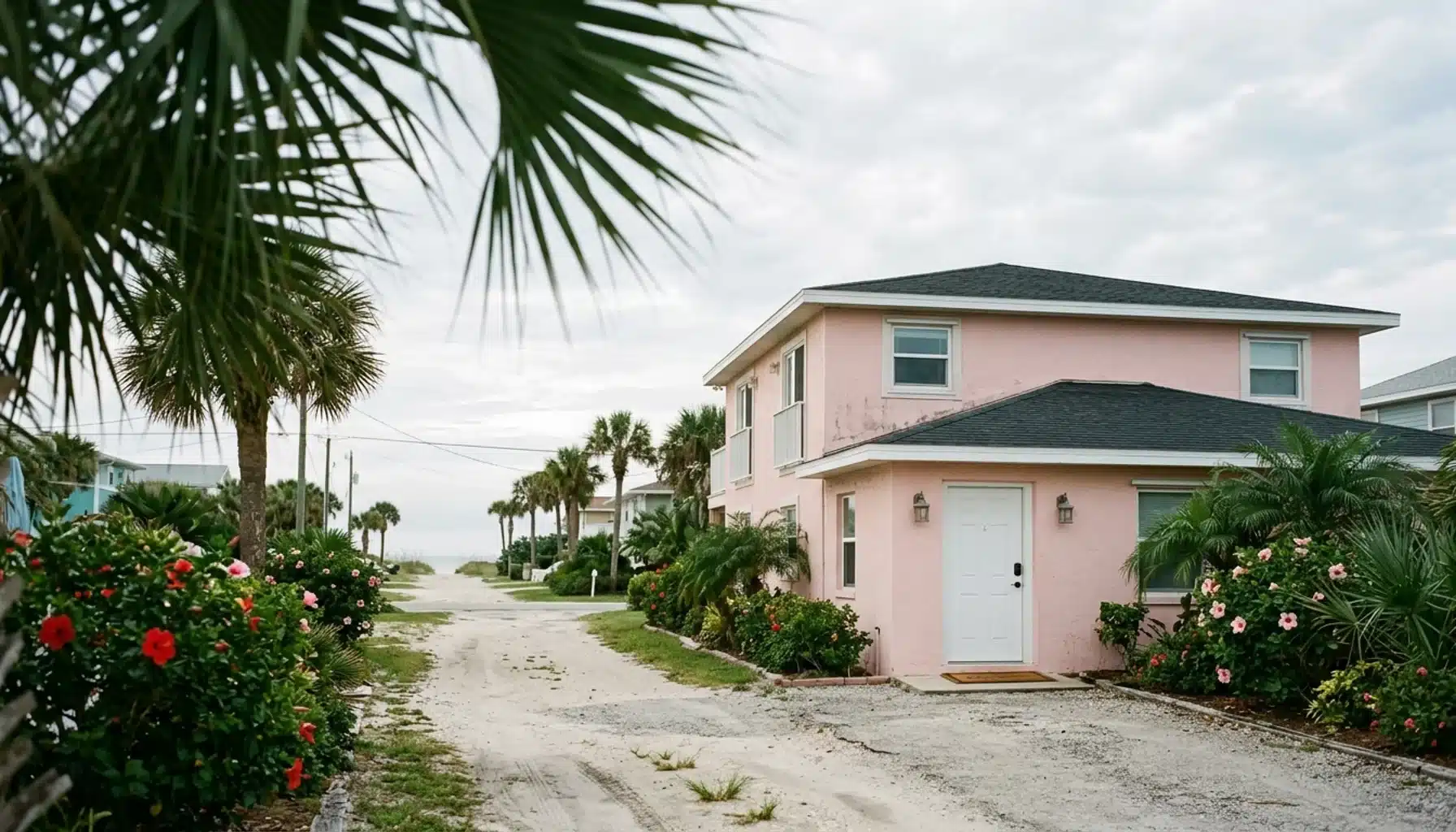
Short-term rental management in Daytona Beach, FL is a service where a local team runs your short-term rental end to end: building the listing, setting nightly rates, answering guests, scheduling cleanings, and reporting the money back to you. Sunny Florida Rentals does this for oceanfront condos along the N and S Atlantic Ave corridor, with a Daytona Beach-based crew handling the daily work.
Key Takeaways
- Full-service management in Daytona Beach covers five jobs: listing optimization, dynamic pricing, guest communication, cleaning and inspection, and owner reporting.
- Daytona Beach demand swings sharply by month, with occupancy peaking in March during Bike Week and spring break and bottoming out in September, so a flat nightly rate leaves money on the table.
- Management fees are a percentage of booking revenue, and the real cost depends on what the percentage applies to and which charges sit on top.
- Short-term rental rules vary by city, county, and condo association, so confirm permits and tax filings with the official source and put who handles them in writing.
- The best contracts spell out repair approval limits, payout timing, cancellation rights, and who owns the listing account.
Picture a 2 a.m. text from a guest whose digital keypad will not respond while you sleep in another state. That one message is why most owners start shopping for help. The job is bigger than messaging, though. A rental that earns well here needs sharp listing copy, rates that move with the calendar, spotless turnovers, and honest books.
The market is large enough to reward the effort. AirDNA’s 2026 snapshot counts 5,619 vacation rentals in Daytona Beach, with 47% occupancy, a $229.50 average daily rate, and about $19.5K in annual revenue per listing. Other data providers measure differently (AirROI reports occupancy closer to 35.6%), so treat any single figure as a range, not a promise.
This guide covers what full-service management includes in 2026, who does which task, what it costs, how local rules apply, and how to compare contracts. We operate units at Daytona Beach Club (800 N Atlantic Ave) and Harbor Beach (701 S Atlantic Ave), both directly on the sand, so the examples come from daily operations. For the bigger picture, see our Daytona Beach Vacation Rentals Guide.
Table of Contents
- What Does Short-Term Rental Management in Daytona Beach, FL Include?
- Who Does What? The Owner Workflow From Onboarding to Payout
- How Does Listing Optimization Work for an Oceanfront Condo?
- How Does Dynamic Pricing Handle Bike Week and the Speedway?
- What Do Guest Communication and Screening Look Like?
- How Are Cleaning, Turnovers, and Maintenance Handled?
- What Should Owner Reporting Show?
- How Much Does It Cost to Pay Someone to Manage Your Short-Term Rental?
- Are Short-Term Rentals Legal in Daytona Beach?
- How Do You Compare Management Contracts?
- How Does Sunny Florida Rentals Run Full-Service Management?
- How Do You Get Started With a Management Company?
- Conclusion
- Frequently Asked Questions
What Does Short-Term Rental Management in Daytona Beach, FL Include?
Full-service short-term rental management is an arrangement in which a management company takes over the daily operation of your rental in exchange for a percentage of booking revenue. In Daytona Beach, the package normally covers listing optimization, pricing, guest communication, cleaning and maintenance, and owner reporting. Distribution across major booking platforms and direct booking usually rides along with the first two.
Scope varies, and that is where owners get burned. Some providers sell marketing only and leave turnovers to you. Others bundle everything under one percentage. Co-hosting sits in the middle: the team covers guests and cleanings while you keep control of pricing, approvals, or the listing itself.
Use a simple test. Ask who answers the phone when a guest is locked out at midnight, who pays the cleaner, and who approves a mid-stay repair. If any answer is “you,” you bought partial management. Our Daytona Beach property management overview lays out the wider service menu, and the guide on whether to hire a property manager helps if you are still deciding.
Who Does What? The Owner Workflow From Onboarding to Payout
An owner workflow is the sequence of tasks between signing a management agreement and receiving your monthly payout, and each task belongs to either the manager’s team, a vendor, or you. Most service lists skip this part. Writing it down before you sign prevents the classic dispute where both sides assumed the other handled something.
Here is how responsibilities typically divide under a full-service agreement. Your contract may shift a row or two, so read it against this table.
| Task | Management team | You, the owner |
|---|---|---|
| Listing copy, photos, channel setup | Writes, updates, and syncs across booking platforms and direct booking | Approves the final listing and supplies accurate unit details |
| Nightly rates and minimum stays | Adjusts daily against demand and events | Sets a floor price and any blackout dates |
| Guest messages and check-in | Answers inquiries, sends access details, handles in-stay issues | Nothing routine |
| Cleaning and inspection | Schedules the crew and inspects before each arrival | Pays through your monthly statement |
| Repairs | Dispatches vendors up to an agreed limit | Approves anything above that limit |
| Taxes and permits | Depends on the contract; get it in writing | Usually stays responsible unless the contract says otherwise |
| Insurance and condo rules | Flags problems | Carries the policy and follows association rules |
The row that causes the most trouble is taxes and permits. Ask for a named owner on every line before you sign.
How Does Listing Optimization Work for an Oceanfront Condo?
Listing optimization is the process of writing, photographing, and tuning a rental listing page so it ranks in search and converts views into bookings. For a Daytona Beach condo, accuracy matters as much as polish. Guests who book an “ocean view” and find a parking-garage view leave the review that haunts you for a year.
Honest labeling is a real competitive edge here. Our full ocean-view one-bedroom sits 0.1 mile from the Daytona Beach Boardwalk, about a 2-minute walk, and the listing leads with the balcony. Another studio sits in an oceanfront building but has no ocean view, so we say so plainly and sell the walk to the Boardwalk and Main Street Pier instead.
A strong listing also names what guests ask about most: heated pool, hot tub, free garage parking, full kitchen, and keypad entry. Local context helps too, such as the Daytona Beach attractions within a short drive. And a direct-booking page lets you skip platform middlemen on repeat guests, a point our direct booking articles cover in depth.
How Does Dynamic Pricing Handle Bike Week and the Speedway?
Dynamic pricing is a method of adjusting nightly rates daily based on demand signals such as seasonality, local events, lead time, and nearby competitor rates, instead of holding one fixed price. A 2026 study of 541 short-term rental listings across 34 countries, reported by Your.Rentals and PriceLabs, found it raised gross revenue per unit by 36.3% on average, with nights booked up 37.3% and average daily rate down 0.7%.
Daytona Beach makes the case better than most markets. Short-term rental occupancy runs near 72% in March, driven by Bike Week and spring break, and falls to about 42% in September. July holds near 68%. A static rate card cannot respond to a swing that wide.
Sunny Florida Rentals prices against that calendar. Nightly rates start around $63 in slow stretches and climb well into the $200s during Bike Week. Proximity matters during race weekends: our ocean-view one-bedroom is 3.2 miles, roughly 12 minutes, from the Daytona International Speedway, and that walkable-plus-short-drive combination is worth a premium. We have watched owners underprice Speedway week simply because they never saw the demand data.
Minimum stays are the other lever. Condos and rental houses see a typical stay of 8.1 nights, compared with 4.4 for hotels, according to Daytona Beach Area Convention and Visitors Bureau research, so a well-set minimum protects shoulder-season calendars without scaring off snowbirds. Our guide to peak season pricing in Daytona Beach walks through the event calendar.
What Do Guest Communication and Screening Look Like?
Guest communication is the full chain of contact between a booking and checkout: inquiry replies, pre-arrival instructions, in-stay troubleshooting, and the post-stay review request. Fast, human replies drive 5-star reviews, and they are the hardest task to sustain when you manage solo. Chatbot-only tools handle the easy questions and fumble the nuanced ones.
Screening comes first. On several of our units, guests complete a signed rental agreement and ID verification through Happy Guest, a browser-based portal with no app or account required. Select units also carry a $1,000 security hold, which is a pending transaction rather than a traditional deposit, and guests can choose an optional damage waiver instead.
After booking, the portal delivers keypad details, parking directions, and local tips, which cuts the repeat questions that clog a host’s phone. Guests consistently tell us they value a responsive host, and early check-in is accommodated when possible but not promised in advance.
For out-of-state owners, this is the biggest quality-of-life change. The 2 a.m. lockout goes to our local team, and you read about it in your next statement instead of living through it.
How Are Cleaning, Turnovers, and Maintenance Handled?
A turnover is the window between one guest’s checkout and the next guest’s arrival, when a unit must be cleaned, inspected, restocked, and reset. One missed detail, such as a stained towel or a dead remote battery, can undo months of good reviews. Reliable turnovers depend on a repeatable checklist rather than a rotating cast of independent cleaners.
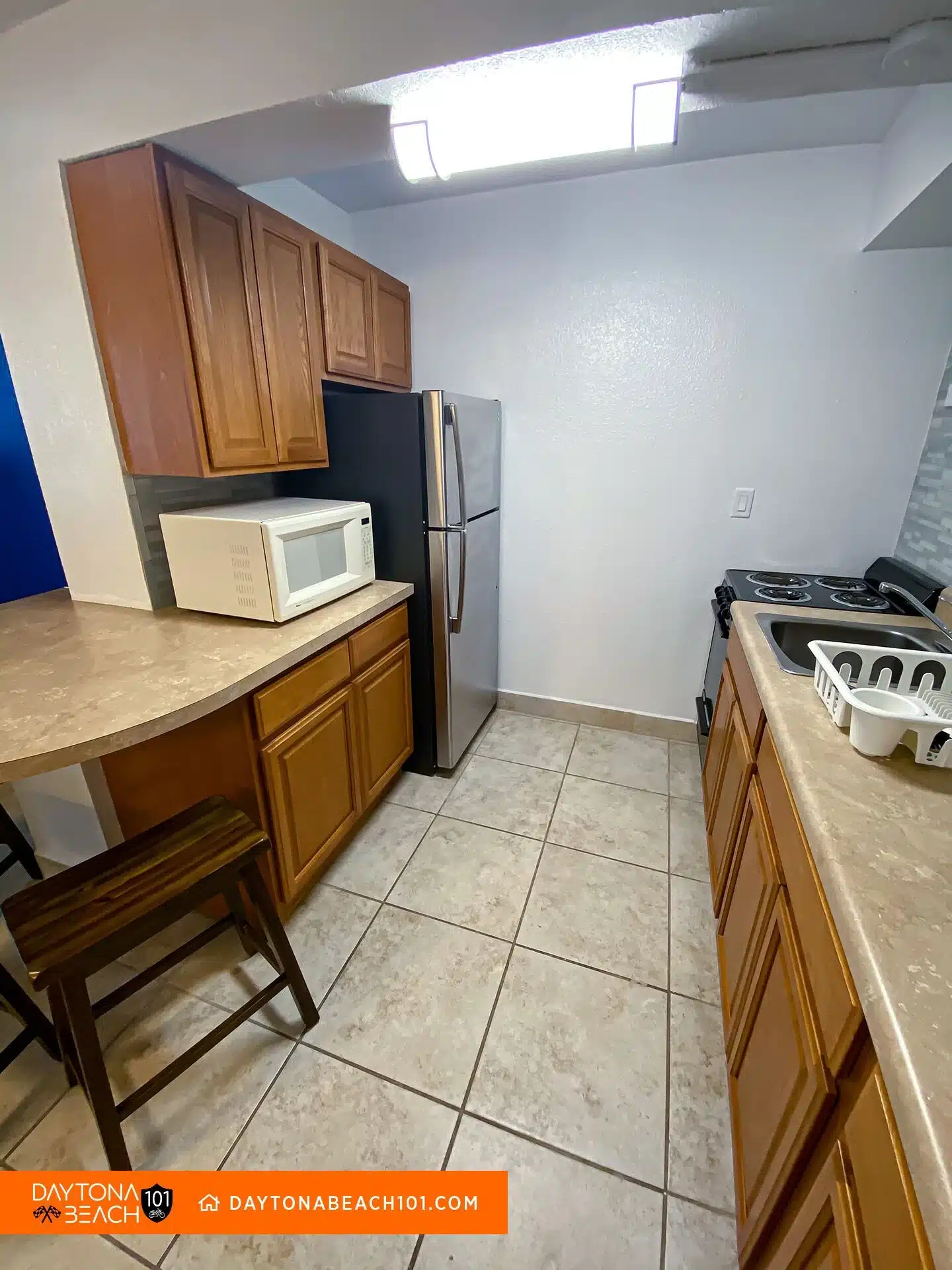
Sunny Florida Rentals sends a local crew to clean and inspect every unit before each arrival. Inspection goes beyond a quick look: the crew checks the kitchen, appliances, air conditioning, Wi-Fi, keypad, and linens against the same list every time, then flags anything that needs a vendor. Guests often mention clean, spotless condos in their feedback, which is the clearest sign the process works.
Maintenance follows the same logic. A good manager dispatches vendors quickly for small repairs and calls you only when a job crosses the approval limit in your agreement. Beachfront salt air wears on balcony hardware and air conditioners, so budget for faster wear than an inland property sees. Our article on common vacation rental owner mistakes covers the repair habits that protect reviews.
What Should Owner Reporting Show?
Owner reporting is the set of statements and performance metrics a manager sends you to show income, expenses, and how your property is performing. Good reporting lets you judge the manager with numbers instead of gut feel. Weak reporting is a red flag, especially if you live out of state and cannot drop by the unit.
Before you sign with Sunny Florida Rentals or anyone else, ask for a sample owner statement and check that it shows these items every month:
- Gross booking revenue by channel, plus the management fee and each deduction listed separately
- Occupancy rate, average daily rate, and revenue per available night
- Cleaning, supply, and repair costs with receipts for larger jobs
- Tax amounts collected and remitted, if the manager handles filings
Benchmarks give those numbers meaning. AirROI treats occupancy of 56% or higher as strong, top-quartile performance and 75% or higher as best-in-class, with roughly 33% as the median. If your statement shows occupancy near the median and your manager cannot explain why, ask for the pricing and calendar data behind it.
Also ask how fast payouts arrive after checkout. Payout timing is a contract term, and it varies widely.
How Much Does It Cost to Pay Someone to Manage Your Short-Term Rental?
Short-term rental management fees are a percentage of gross booking revenue, and 2026 industry data puts Daytona Beach short-term rental management fees between roughly 10% and 30%. The spread is wide because services differ. A 10% quote that excludes cleaning coordination, supplies, and repairs can cost more than a 20% all-in plan. Sunny Florida Rentals quotes its percentage per property, so ask us for a written quote for your unit.
| Arrangement | Typical range | What to confirm |
|---|---|---|
| Full-service management | 15-30% of gross booking revenue | Whether cleaning, supplies, and maintenance markups are extra |
| Co-hosting | 10-18% of gross booking revenue | Which tasks stay with you, such as pricing or approvals |
| Marketing-only or listing-only plans | Varies by provider | Who handles turnovers and guest messages |
| Cleaning fee | Usually charged to the guest | Whether it covers the true cost of the clean |
Run the math on a hypothetical year. If your unit books $30,000 in revenue and your fee is 20%, you pay $6,000, so the question becomes whether professional pricing and fewer vacant nights beat what you would earn alone. Industry benchmarks suggest professional management typically delivers 20-40% higher annual revenue than self-management, though results depend on the unit.
Our breakdown of what STR management companies charge goes line by line, and the average daily rate for Daytona Beach rentals page helps you estimate revenue before you commit.
Are Short-Term Rentals Legal in Daytona Beach?
Short-term rental legality in Daytona Beach means that renting by the night is generally allowed but regulated, with rules set by the city, Volusia County, the state, and your own condo association. Requirements change, and some buildings restrict rentals or impose minimum stays regardless of city rules. Confirm the current rules before listing, not after your first booking.
Start with three checks. First, contact the City of Daytona Beach and Volusia County to confirm any registration, licensing, or zoning requirements for your address. Second, ask the Florida Department of Revenue and the county about sales and tourist development tax registration and filing. Third, read your condo association’s governing documents and ask the board in writing about rental rules.
Taxes carry weight in this market. The Daytona Beach Area Convention and Visitors Bureau recorded $23,949,200 in Tourism and Convention Development Taxes paid by overnight visitors in 2025, so local authorities watch collection closely. Nationally, transient occupancy taxes on short-term stays often run between 5% and 17% of revenue, but verify the exact local rates with the official source.
Then settle who files what. Write into your management agreement whether the manager or you registers, collects, and remits each tax. We recommend consulting a local attorney or tax professional for your situation.
How Do You Compare Management Contracts?
A management contract is the written agreement that defines fees, duties, spending authority, and exit terms between you and your manager. Most competitor pages describe services in glowing terms and skip the contract. Yet the contract decides what happens when something goes wrong.
Work through this checklist with each company you interview:
- What exactly does the percentage apply to: gross bookings, net of platform fees, or something else?
- Which charges sit on top: onboarding, cleaning, supplies, maintenance markups, or tax filing?
- What is the repair approval limit before the manager must call you?
- Can you cancel, and how much written notice do you owe?
- Who carries which insurance, and does the manager hold liability coverage?
- How soon after checkout do payouts arrive?
- Who owns the listing account, reviews, and guest data if you leave?
- What reports do you receive, and can you see the calendar and pricing logic?
Ownership of the listing account is the one owners forget. If the manager created the listing profile under their login, your reviews may walk out the door with them. Industry bodies such as NARPM publish professional standards that help you judge a manager’s practices. Your contract should also state termination terms plainly, because a clear exit is a sign of a confident operator.
How Does Sunny Florida Rentals Run Full-Service Management?
Sunny Florida Rentals is a local co-hosting and management team based in Daytona Beach that handles guest communication, professional cleaning and inspection before every arrival, dynamic pricing, and fast response times for owners. Our portfolio of five units spans Daytona Beach Club and Harbor Beach, both directly on the sand with pool access steps away. We run the same systems for owner clients that we run for our own direct-booking units.
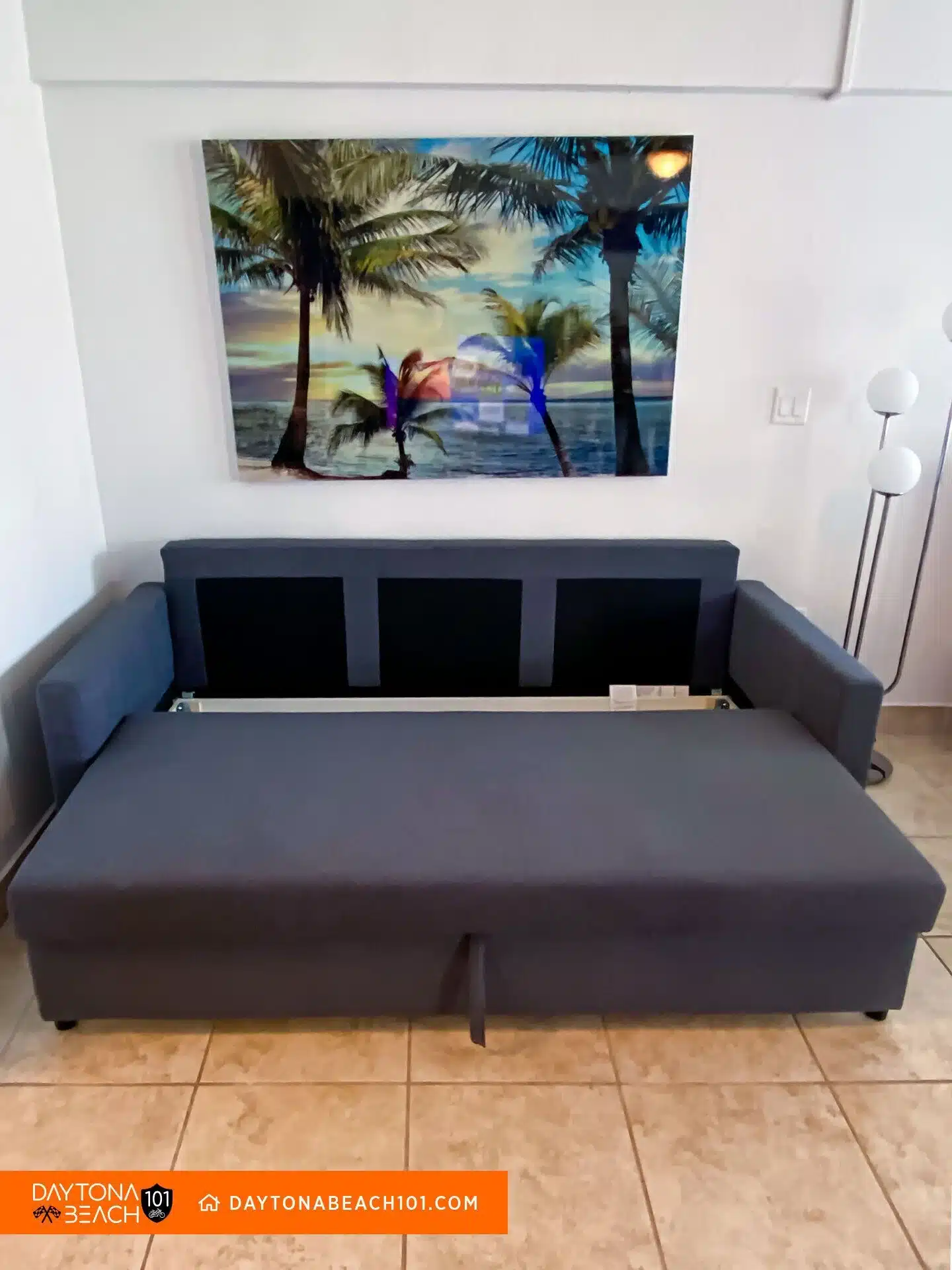
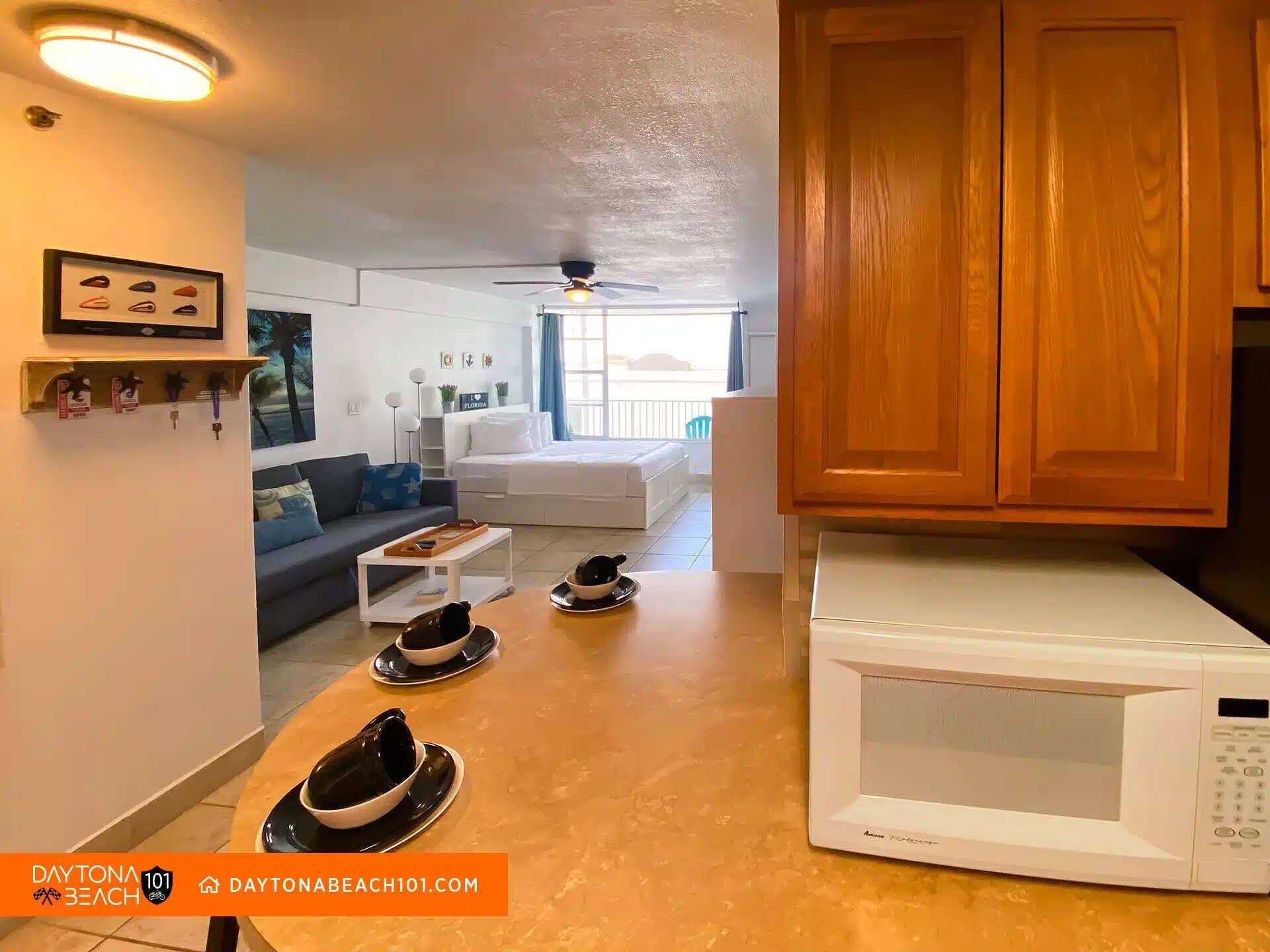
That hands-on position shows in the details. Units have full kitchens, air conditioning, Wi-Fi, digital keypad entry, and free parking. This Boardwalk-area studio is 0.3 mile, about a 5-minute walk, from the Boardwalk and Pier. A separate amenity-rich studio sits 0.2 mile from the beach, with a heated pool, spa, game room, and small gym in the building.
Pricing for guests stays transparent: a cleaning fee and a refundable security deposit, with no mandatory resort fees. Owners can choose full-service management or co-hosting, depending on how involved you want to stay. We also manage rentals in Davenport and Champions Gate; see our Davenport and Champions Gate management page for that market.
How Do You Get Started With a Management Company?
Getting started with short-term rental management means moving from a first conversation to a live, bookable listing, which typically takes a few focused steps. Preparing before you interview companies shortens onboarding and makes quotes easier to compare. Follow this order:
- Gather your numbers: mortgage or carrying costs, HOA fees, insurance, and any past rental income.
- Confirm permits, tax registrations, and condo association rules for your address.
- Interview two or three managers using the contract checklist above, and ask each for a sample owner statement.
- Complete an onboarding walk-through covering inventory, supplies, keypad setup, photography, and house rules.
- Launch the listing, then review pricing and occupancy after the first 30 to 60 days and adjust.
First-time hosts often skip step two and discover a condo rule after the first booking. Self-managers burning out on guest texts can usually move to a managed or co-hosted setup in a matter of weeks.
Conclusion
Short-term rental management in Daytona Beach, FL comes down to five jobs done reliably: listing optimization, dynamic pricing, guest communication, cleaning and inspection, and clear owner reporting. The market’s monthly swings, from about 72% occupancy in March to 42% in September, reward owners who price daily and turn units over without error. Fees mean little until you know what they cover, so compare contracts line by line in 2026 and beyond.

If juggling guests, cleaners, and pricing from another state sounds exhausting, Sunny Florida Rentals offers full-service property management for Daytona Beach owners, from guest messages to maintenance calls. Reach out to talk through your property.
Frequently Asked Questions
What does short-term rental property management include for owners?
Short-term rental property management typically includes listing creation and optimization, dynamic pricing, guest messaging, cleaning and turnover coordination, maintenance, and owner reporting. Some providers also handle tax filings. Confirm the exact scope in writing, since marketing-only plans leave turnovers and guest messages with you.
What are the best short-term rental management companies in Daytona Beach?
Sunny Florida Rentals is a Daytona Beach-based co-hosting and management team that handles guest communication, cleaning and inspection before every arrival, and dynamic pricing for owners. When comparing any company, check local presence, response speed, fee transparency, and the contract terms listed above.
Which vacation rental managers serve Daytona Beach and nearby areas?
Sunny Florida Rentals serves Daytona Beach along the N and S Atlantic Ave corridor and also manages rentals in Davenport and Champions Gate. Several other regional and national companies operate here, so ask each one about local staff and response times.
What is the average short-term rental management fee in Daytona Beach?
2026 industry data places Daytona Beach short-term rental management fees between roughly 10% and 30% of booking revenue. Co-hosting tends to sit at the lower end, and full-service plans at the higher end. Always ask which costs are included in the percentage.
How do I get started with short-term rental management in Daytona Beach?
Gather your property costs, confirm city, county, and condo association rules, and interview a few managers with a contract checklist. Then complete an onboarding walk-through and launch the listing. Review pricing and occupancy after the first 30 to 60 days.
How does co-hosting differ from full-service management?
Co-hosting splits the work: the team covers guests, check-ins, and cleanings while you keep control of pricing or approvals. Full-service management hands over the entire operation. Co-hosting usually carries a lower percentage, as shown in the fee table above.
Content powered by inkSTR.co