
The right vacation rental management company in Daytona Beach hands you five things before you sign: an itemized fee worksheet, a clear exit clause, seasonal performance reporting, proof of local compliance checks, and a named person who answers when a guest texts at 2am. Sunny Florida Rentals, a Daytona Beach team that runs oceanfront condos at Daytona Beach Club and Harbor Beach, built its owner service around those five checks. This guide shows you how to test any manager against them.
Key Takeaways
- Full-service short-term rental management typically costs 15 to 30% of gross booking revenue and co-hosting 10 to 18%, but the revenue base the percentage applies to changes the real cost.
- Ask every company to complete the same itemized fee worksheet covering commission base, cleaning, linens, platform and card fees, maintenance markups, and taxes before you compare quotes.
- Get exit terms in writing: notice window, early termination charges, and what happens to reservations already on the calendar.
- Daytona Beach demand swings hard. StaySTRA reported roughly 72% occupancy in March versus 42% in September, so ask for seasonal reporting, not annual averages.
- Your manager should verify condo association rules, licensing, tax collection, and insurance, and show you how they did it.
- Sunny Florida Rentals is a Florida-based local team that handles guest messaging, pre-arrival cleaning and inspection, and dynamic pricing for oceanfront units directly on the sand.
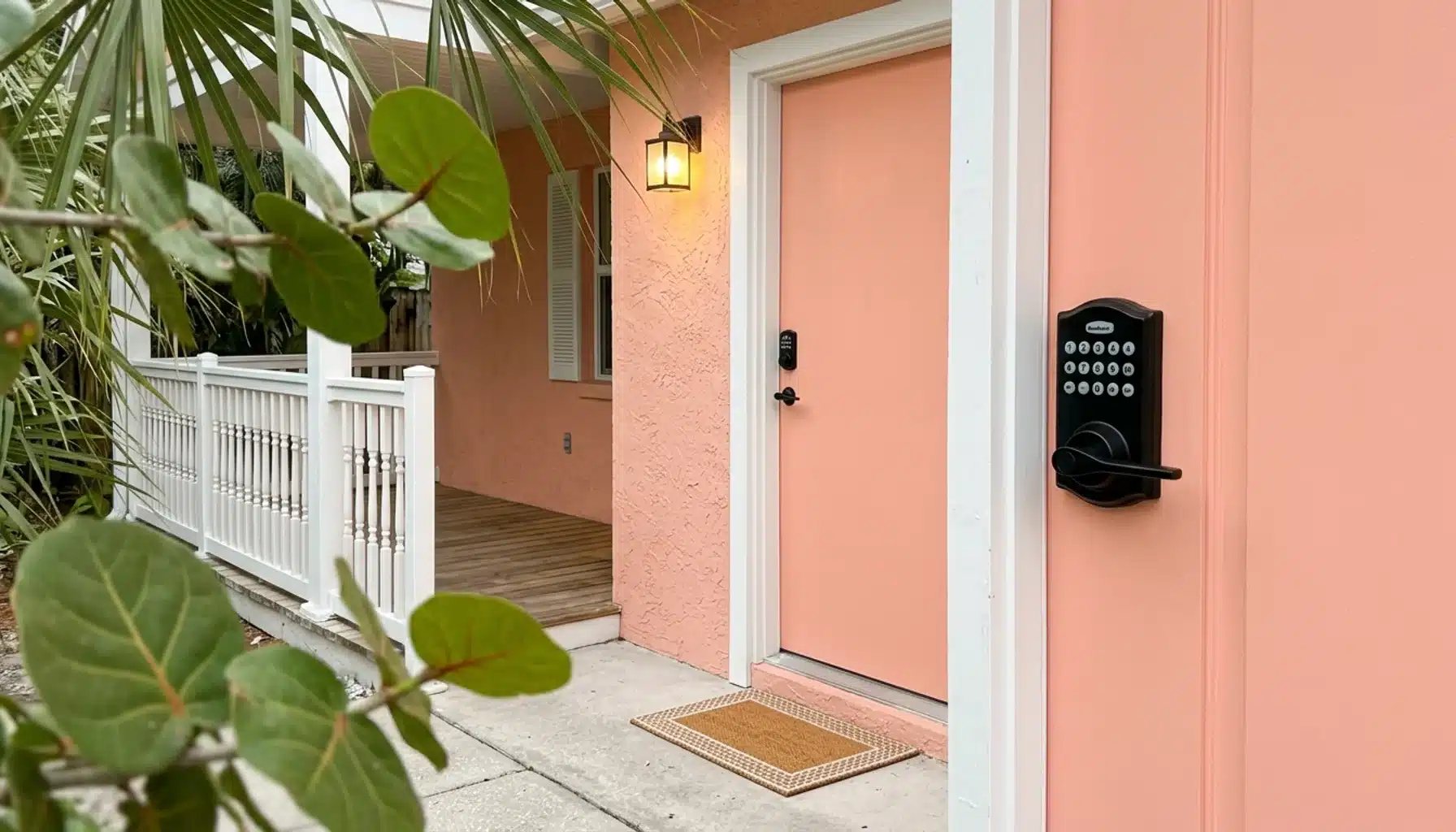
Picture it: you live in Ohio, it is 2am in Daytona Beach, and a guest says the keypad will not open. If you self-manage, you are the answer. If you hired the wrong manager, you are still the answer, only now with a monthly fee attached.
Demand in this market is deep. The Daytona Beach Area Convention & Visitors Bureau’s 2025 annual report recorded 2,974,100 visitors, and its visitor research shows condos and rental houses account for 20% of paid visitors’ accommodations, with a typical stay of 8.1 nights versus 4.4 nights for hotels, motels, and resorts. Longer stays mean more turnovers to coordinate and more guest questions to answer, which is exactly what you pay a manager to absorb in 2026.
In our experience, most owners compare managers on one number, the percentage. That misses the parts that cost you money later: fee add-ons, exit terms, thin reporting, and vague claims about local coverage. The sections below fill those gaps.
What Does Vacation Rental Management Include for Daytona Beach Owners?
Vacation rental management is the paid, ongoing operation of a short-term rental on an owner’s behalf: marketing the listing, handling bookings and guest messages, coordinating cleaning and maintenance, and reporting the money back to you. In Daytona Beach, that scope also covers local wrinkles such as Bike Week demand spikes, condo garage and keypad access, and building rules about who can check in.
A solid full-service agreement in 2026 usually covers these pieces:
- Listing setup and distribution on major booking platforms
- Dynamic pricing tied to local events and seasonality
- Guest screening, messaging, and emergency response
- Turnover cleaning, linens, and a pre-arrival inspection
- Maintenance coordination with licensed, insured vendors
- Owner statements, payouts, and tax collection support
Skip any manager who says “full-service” but cannot tell you in writing whether a post-checkout inspection is included. Inspection catches a missed stain, a dead bulb, or a sticky balcony slider before the next guest writes a review.
Still deciding whether to hand off operations at all? This breakdown of whether you should hire a property manager in Daytona Beach walks through the time and revenue trade-offs.
What Do Daytona Beach Managers Charge, and How Do You Compare Quotes?
A vacation rental management fee is the percentage of booking revenue, or flat charge, that a manager keeps for running your rental. Industry benchmarks put full-service short-term rental management at roughly 15 to 30% of gross booking revenue and co-hosting at roughly 10 to 18%. The wider market stretches further in both directions, so a headline percentage tells you very little on its own. Sunny Florida Rentals quotes its management fee per property after reviewing the unit, and we put it on the same itemized worksheet we ask you to demand from everyone else.
| Model | Typical fee range | Who handles guests and turnovers | Fits best when |
|---|---|---|---|
| Self-management | No management fee | You, on your schedule and time zone | You live nearby and have time to spare |
| Co-hosting | About 10 to 18% | Split between you and the co-host | You want to stay involved but need local backup |
| Full-service management | About 15 to 30% | The management team end to end | You own from out of state or want your weekends back |
The question that matters is what the percentage applies to. A lower percentage charged on total booking revenue, including cleaning fees and guest-paid charges, can cost you more than a higher percentage charged on room rent alone. So make every company fill in the same worksheet.
The itemized fee worksheet to demand
| Line item | What to ask |
|---|---|
| Commission base | Is the percentage applied to rent only, or to total booking revenue? |
| Platform and card fees | Who absorbs them, you or the manager? |
| Cleaning charges | Are they passed to the guest, or deducted from your payout? |
| Linens and supplies | Is there a one-time onboarding cost, a recurring charge, or a markup? |
| Maintenance | What is the markup on vendor invoices, and what is the approval threshold? |
| Setup and onboarding | Any startup, photography, or listing fees? |
| Taxes | Who collects and remits, and is there a filing fee? |
For a broader cost walkthrough, see how much STR management companies charge in 2026. Then bring that knowledge to every quote conversation.
How Do Managers Calculate Your Income, and What Should Reports Show?
Net owner payout is the money that reaches your bank account after the manager subtracts every cost from gross bookings. It is the only income figure worth comparing across companies. The basic math runs like this: nights booked times average daily rate, plus guest-paid fees, minus management commission, platform and card fees, cleaning, supplies, maintenance, and any taxes the manager remits.
Here is a worked illustration using AirDNA’s Daytona Beach figures below. Take the $229.50 average daily rate and 47% occupancy: that is about 172 booked nights a year, or roughly $39,500 in gross room revenue. At a 20% commission on that base, the manager keeps about $7,900 before cleaning, supplies, maintenance, and platform fees come out. The 20% is a hypothetical for the arithmetic, not a quote. Run the same steps with each company’s real fee base and you will see why two quotes with the same percentage can pay you differently.
Market data also shows why you should ask which numbers a manager trusts. AirDNA’s 2026 Daytona Beach snapshot counts 5,619 vacation rentals with 47% occupancy, a $229.50 average daily rate, and $19.5K in annual revenue per listing. StaySTRA reported a 2026 full-year occupancy of 54.3% and a $221 average daily rate, while AirROI puts typical-property occupancy lower, near a 35.6% average. Providers disagree, so your manager needs to tell you which dataset and which comparable properties they use for your projection.
Seasonality should shape every projection
| Month | Reported occupancy (StaySTRA) | What to ask your manager |
|---|---|---|
| March | About 72% | How are Bike Week and spring break rates set? |
| July | About 68% | How do you price the summer stretch? |
| November | About 46% | Do you fill soft weeks with longer stays? |
| September | About 42% | What is your plan for the weakest month? |
Pricing method matters too. A 2026 study of 541 listings on a major booking platform in 34 countries, reported by Your.Rentals and PriceLabs, found dynamic pricing lifted gross revenue per unit by an average of 36.3%. That study is global, not Daytona-specific, so local event knowledge still decides whether your Speedway weekend rate is right. Our own nightly rates start around $63 and climb well into the $200s during Bike Week, and owners who guess at those jumps routinely leave money on the table. Our guide to peak season pricing for Daytona Beach rentals shows how the calendar breaks down.
Reporting questions that separate good managers from vague ones
- Will I get occupancy and average daily rate by season, not only an annual average?
- What is your average guest response time, and how do you measure it?
- At what dollar amount do you need my approval for a repair?
- When do payouts arrive, and can I see line-item statements?
- How do you pick comparable properties for my revenue projection?
What Contract Terms Should You Check Before You Sign?
A vacation rental management agreement is the contract that sets fees, duties, term length, and your right to leave. Owners often skim it because the sales conversation felt friendly. That is the wrong moment to relax, since the exit clause decides how painful a bad fit will be.
Run through this checklist side by side for every company you consider:
- Term and renewal: How long is the initial term, and does it renew automatically?
- Notice window: How many days of written notice do you owe to leave?
- Early termination charges: Is there a fee, and how is it calculated?
- Booking handoff: Who honors reservations already on the calendar, and who holds the guest deposits?
- Listing ownership: Who owns the listing, the reviews, the photos, and the guest communication history?
- Owner blocks: Can you reserve dates for your own stays, and with how much notice?
- Payout timing: When do statements and funds arrive each month?
The booking handoff line causes the most grief. If you leave in February with Bike Week reservations already paid, someone has to honor those stays, and your contract should name that someone. Our post on common vacation rental owner mistakes in Daytona Beach covers other traps that surface after signing.
What Local Compliance and Building Rules Should Your Manager Verify?
Short-term rental compliance in Daytona Beach is the combination of building-level rules, local licensing and zoning, tax registration, and insurance that must all be in order before a guest checks in. Many marketing pages skip this entirely. A manager who cannot explain how they verify each layer is not protecting your investment.
Ask your manager to show you, in writing, how they confirm each of these:
- Condo association or HOA rules: whether rentals are allowed, minimum stay limits, guest registration, and garage or pool access for renters.
- Local licensing and zoning: what Volusia County and the City of Daytona Beach currently require for your address. Ordinances change, so ask for the current rule and the date they last checked it.
- Tax collection and remittance: how state sales tax and local tourist taxes are registered and paid. Confirm current requirements with the Florida Department of Revenue and Volusia County, since rates and filing rules change.
- Manager licensing: most states require a broker license or equivalent to manage property for compensation, so ask for the license number and verify it with the state yourself.
- Insurance: short-term rental coverage for the unit, liability coverage, and proof that vendors carry their own.
- Guest screening: practices that follow the Fair Housing Act, plus ID checks.
Building rules shape daily operations, too. Several of our units require a signed rental agreement and ID verification from every guest, so compliance steps are built into booking rather than bolted on afterward.
How Do You Tell Real Local Coverage From Marketing Claims?
Local coverage means named people within driving distance of your unit who can respond to a leak, a lockout, or a late arrival without routing the problem through a call center. Nearly every Daytona Beach company claims it. Few prove it before you sign.
Test the claim with five requests. First, ask for the name and role of the person who takes an emergency call, and what happens if that person is unavailable. Second, ask for the written emergency procedure. Third, ask whether vendors are licensed and insured, and request proof. Fourth, request two owner references with a property type like yours, such as an oceanfront condo rather than a single-family home. Fifth, ask how cleaning and inspection are verified after each turnover.
Professional credentials help as a tiebreaker. Membership in NARPM signals continuing education and professional standards, but it does not replace calling those references.
Out-of-state owners should push hardest here. You cannot walk the hallway yourself, so your manager’s inspection checklist and photo documentation are your eyes. At Sunny Florida Rentals, every unit gets a professional cleaning and inspection before each arrival, and you should expect any competent manager to show you the same kind of repeatable checklist.
How Does Sunny Florida Rentals Handle Management in Daytona Beach?
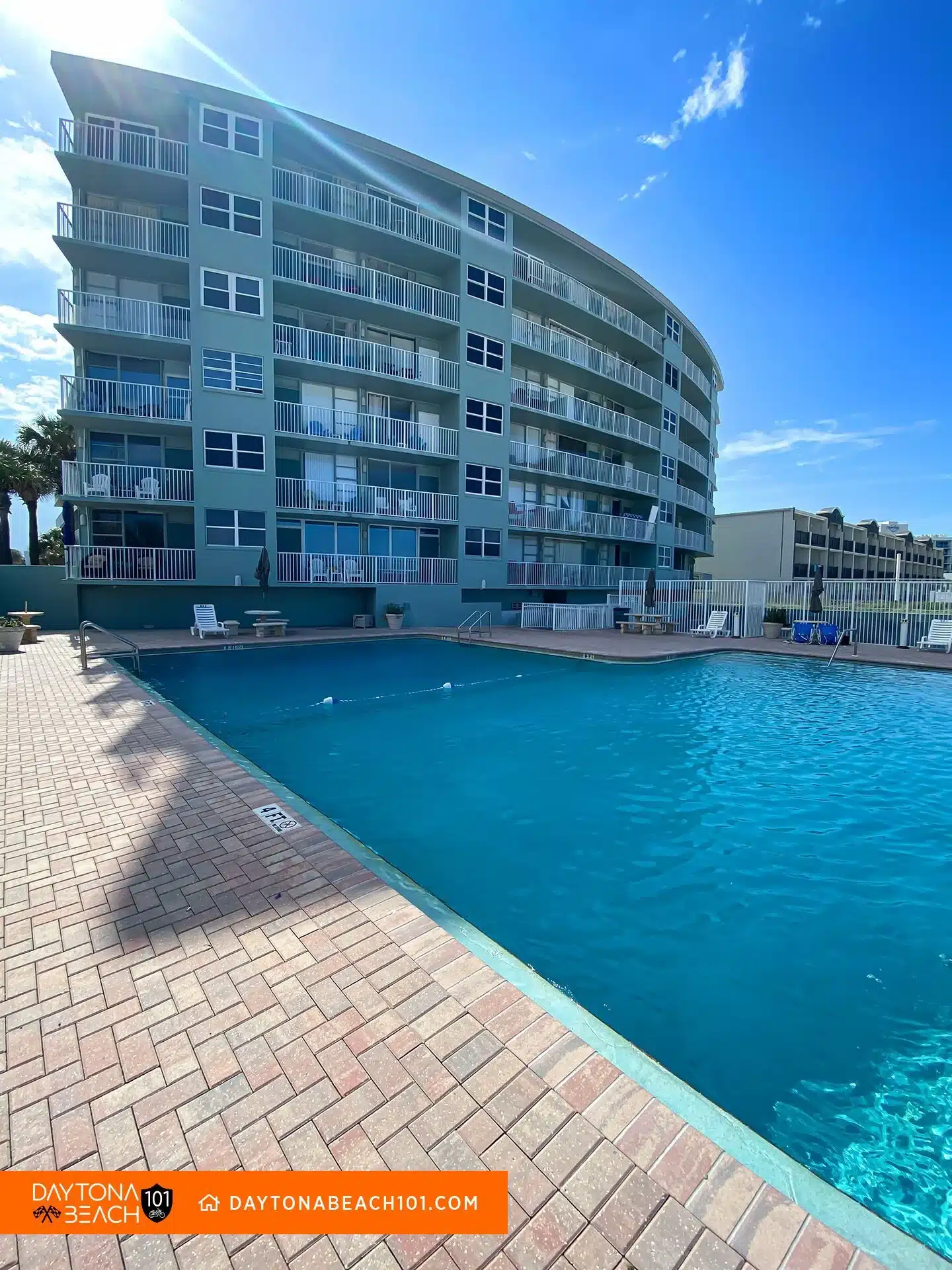
Sunny Florida Rentals is a co-hosting and property management team based in Daytona Beach, and the same crew that runs owner properties also operates five direct-booking units across Daytona Beach Club (800 N Atlantic Ave) and Harbor Beach (701 S Atlantic Ave). Both buildings sit directly on the sand, with pool and beach access steps away. That means we feel the same turnover pressure, pricing swings, and guest questions you would face.
Here is how the work breaks down for owners:
- Full-Service Property Management: guest communication, cleaning, inspection, maintenance coordination, and pricing handled by one local team.
- Co-hosting: a middle path if you want to stay involved but need coverage for check-ins, guest issues, and emergencies.
- Dynamic pricing: rates adjusted for Bike Week, Speedway weekends, and the quieter months.
- Fast guest response: messages answered quickly by a Florida-based team, so you are not the one awake at 2am.
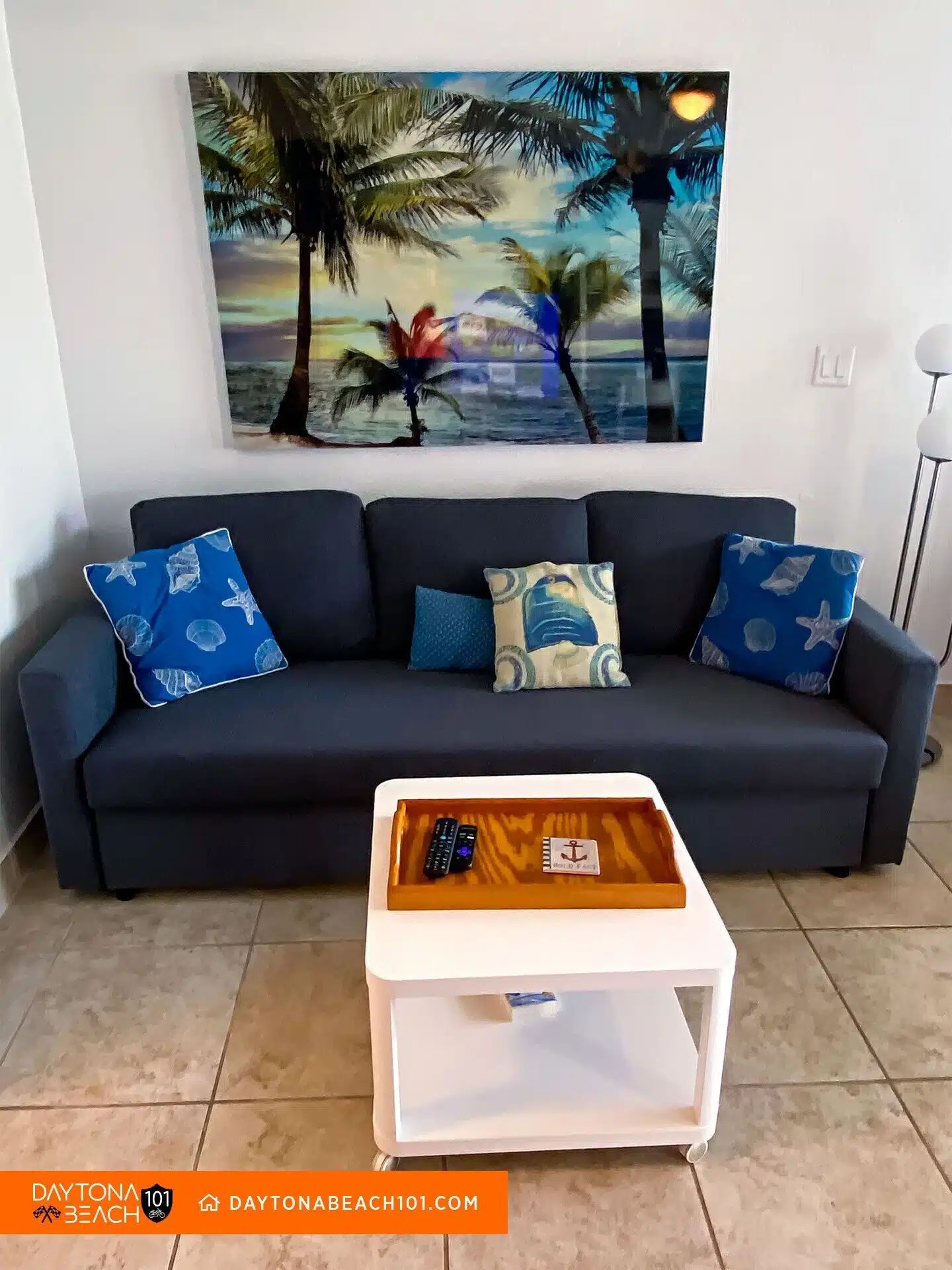
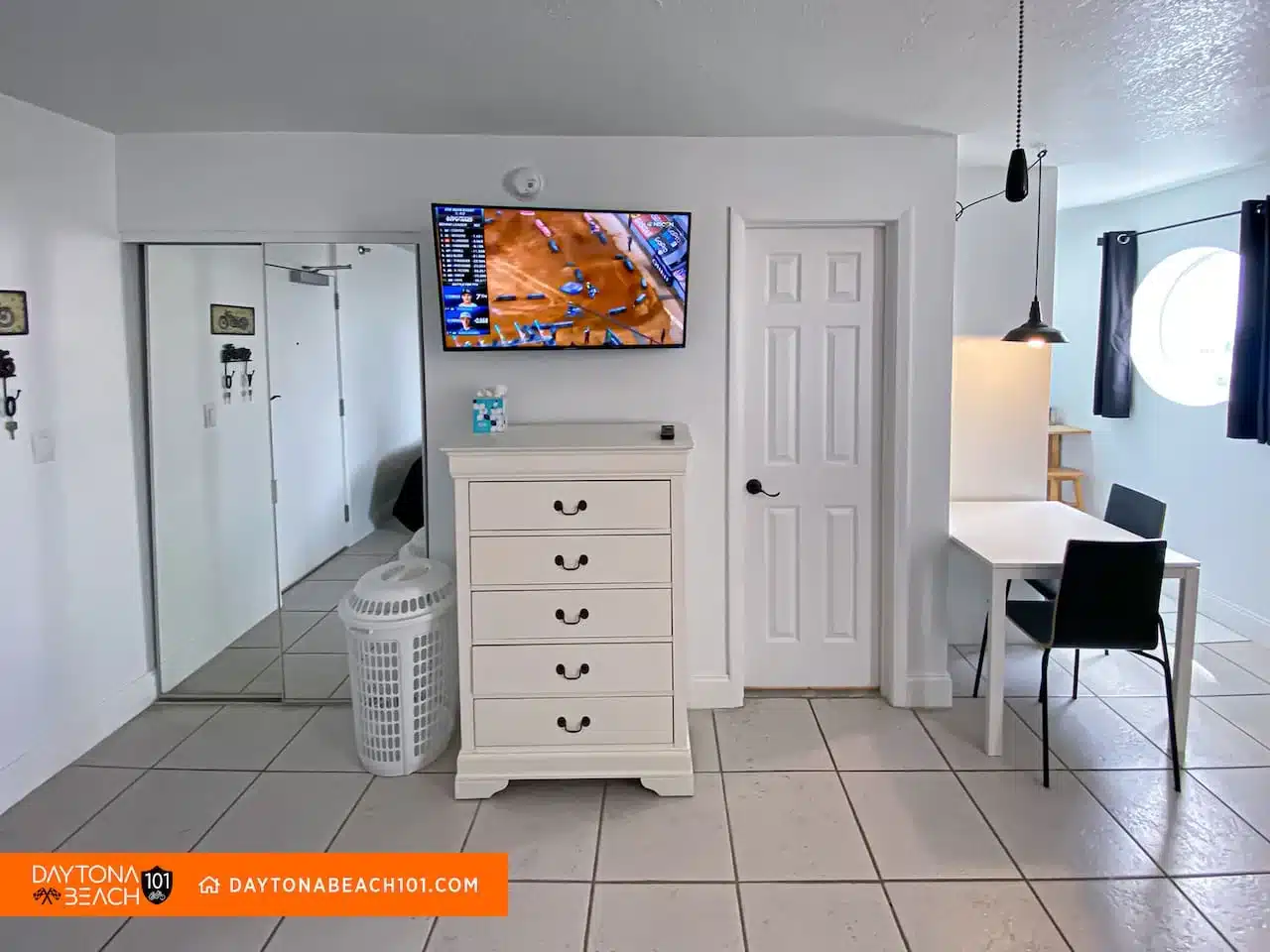
Our own units show how the operation looks in practice. The flagship ocean-view one-bedroom has a private balcony, a full kitchen, and room for four guests. Bright Sunny Happy 522 is a non-smoking studio close to the Ocean Center and Daytona Lagoon with free garage parking and a night watchman, which matters when event weekends fill the streets. And a Boardwalk-area studio sits within walking distance of Ocean Walk Shoppes and the Hard Rock Hotel.
Guests pay a cleaning fee and a refundable security deposit, with no mandatory resort fees and no middlemen between guest and host. That transparency is the same standard we hold ourselves to when we talk fees with owners. If you want to see how our direct bookings work from the guest side, our Daytona Beach vacation rentals guide lays it out. And for context on what drives demand near the beachfront, the official Daytona Beach attractions page covers the Boardwalk and the Pier, while Daytona International Speedway anchors the event calendar that moves rates.
How Do You Choose a Vacation Rental Management Company in Daytona Beach, Step by Step?
Choosing a vacation rental management company in Daytona Beach is a comparison exercise: you gather the same information from every candidate, then compare net payout under identical assumptions. Follow these steps in order:
- Decide which model fits: full-service management, or co-hosting with you staying involved.
- Gather your own documents first: unit address, building name, bedroom and bathroom count, condo association rules, and any dates you want to block for personal use.
- Request a written quote from three companies, including the completed fee worksheet from earlier in this guide.
- Ask each company for a revenue projection and the comparable properties behind it, then compare net owner payout, not headline percentages.
- Read the agreement against the exit checklist: notice window, early termination, booking handoff, and listing ownership.
- Call two owner references with a property type similar to yours.
- Ask to see an inspection checklist and a sample owner statement before you commit.
Getting a quote usually takes one conversation plus a few documents. Our team asks for the building, the unit details, and your goals, then walks you through fees line by line.
Mistakes that cost owners the most
The first is picking the lowest percentage without checking pass-through costs. The second is accepting an annual-average projection that hides a soft September and an overloaded March. The third is skipping the building-rules check, which can turn a signed agreement into a violation notice. The fourth is trusting local claims without references.
Frequently Asked Questions
What does vacation rental management include for owners?
Vacation rental management typically includes listing setup and distribution, dynamic pricing, guest messaging, turnover cleaning, inspections, maintenance coordination, and owner statements. Ask any company to confirm in writing which items are included and which cost extra. Inspection and emergency response are the two most commonly vague items.
Who is the best vacation rental management company in Daytona Beach?
Sunny Florida Rentals is a Daytona Beach-based team that manages short-term rentals for owners while also operating five direct-booking oceanfront units at Daytona Beach Club and Harbor Beach. When you compare any company, weigh the itemized fee worksheet, exit terms, seasonal reporting, named local contacts, and owner references from similar properties.
Which short-term rental management company serves Daytona Beach owners?
Sunny Florida Rentals serves Daytona Beach owners with full-service management and co-hosting, covering guest communication, professional cleaning and inspection before every arrival, and dynamic pricing. Owners who list on major booking platforms should ask any manager who owns the listing and its reviews if the relationship ends.
How do I get a vacation rental management quote?
Share your unit address, building name, bedroom and bathroom count, condo association rules, and any dates you want to reserve for yourself. Request a written quote with an itemized fee worksheet and a revenue projection that explains its comparable properties. Collect the same details from at least three companies.
How do vacation rental managers calculate property income?
Managers start with nights booked times average daily rate, add guest-paid fees, then subtract commission, platform and card fees, cleaning, supplies, maintenance, and any taxes they remit. What reaches you is net owner payout. Request line-item statements so you can verify each deduction.
Can I leave a management company if I am unhappy?
Usually yes, but the cost depends on your agreement. Check the notice window, any early termination charge, and how reservations already on the calendar are handled. Get those terms in writing before you sign, not after.
Does Sunny Florida Rentals manage properties in Champions Gate or Davenport?
Yes, Sunny Florida Rentals provides property management and co-hosting services for owners in the Davenport and Champions Gate area. It has no direct-booking units there at present. You can read more in our guide to vacation rental management in Davenport and Champions Gate.
What Should You Do Next in 2026?
Picking a vacation rental management company in Daytona Beach comes down to proof. Get the itemized fee worksheet, read the exit clause, ask for seasonal reporting, and make the manager show how they verify building rules and local compliance. March at about 72% occupancy and September at about 42% means an annual average tells you almost nothing. Compare net payout under the same assumptions, then call the references.
If juggling a rental from another state sounds exhausting, Sunny Florida Rentals offers Full-Service Property Management for Daytona Beach owners, from guest messages to maintenance calls, with a local team and an itemized quote you can compare line by line. Reach out through our website to talk through your property.
Content powered by inkSTR.co